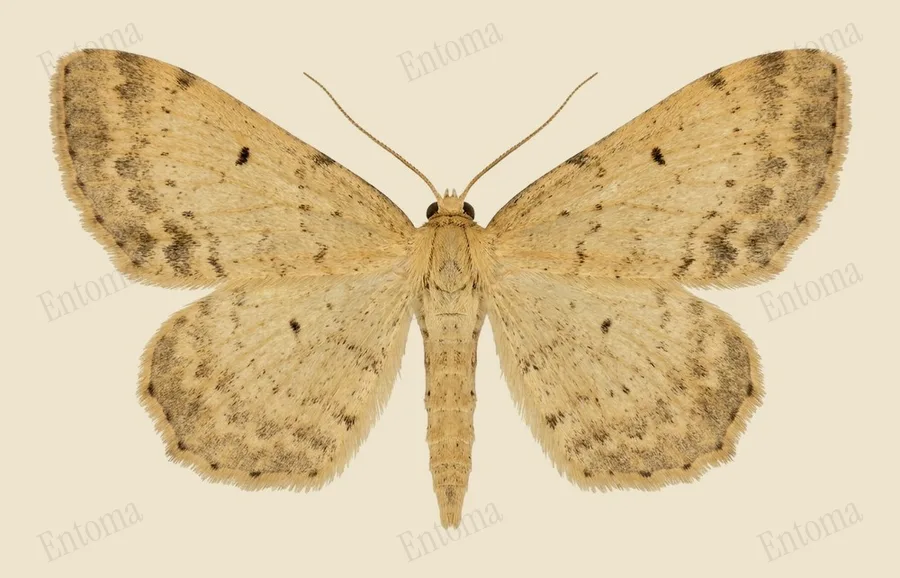
Single-dotted wave
This small moth's caterpillars keep feeding through the coldest months, from autumn to the following spring, on the flowers of cow parsley and hedge bedstraw.
| Where | Marshy woodland, fens and river banks |
|---|---|
| Size | 13 to 18 mm wingspan |
| When | June to September |
The Single-dotted Wave is a small moth with brownish yellow to whitish forewings crossed by fine dark lines and a single dark dot near the centre of each wing. A dark patch usually sits near the outer edge of the forewing, and a line of small dots runs around the wing margins.
Caterpillars feed through autumn and winter on the flowers of cow parsley, burnet-saxifrage and hedge bedstraw, mainly in damp places such as marshy woodland, fens and river banks. Adults fly from June to September and come readily to light.
Traits
Habitat
Wetland
Colour
Yellow, Brown
Active
Night
To people
Comes to light after dark; harmless to people.
Activity through the year
Often confused with
Generally larger at about 23 to 25 mm wingspan, with plainer whitish forewings marked by a dark brown outer band pinched in two places rather than scattered dots.
Questions
Is the Single-dotted wave dangerous to people?
Comes to light after dark; harmless to people.
When can you see the Single-dotted wave?
The Single-dotted wave can be seen from June to September, at night.
Plate retouched from a photo by Donald Hobern from Copenhagen, Denmark, CC BY 2.0, Wikimedia Commons Licence
Report a mistake in this entry
Butterflies and moths›Geometer moths›Idaea
Last updated 2026-09-26. Every entry is checked against published sources.