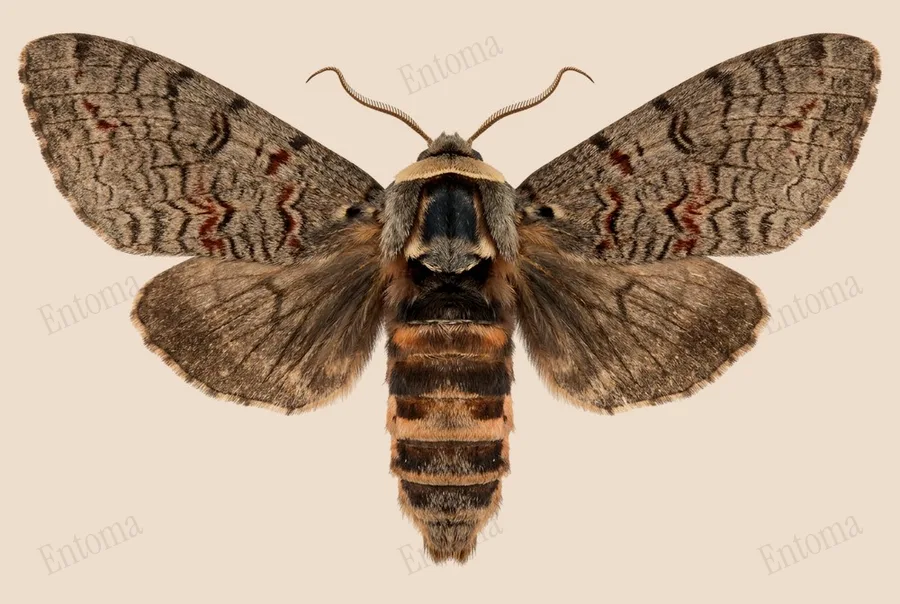
Goat moth
Goat moth caterpillars spend three to five years feeding inside living tree trunks before emerging, making them among the longest lived larvae of any moth in Europe.
| Where | Damp deciduous woodland and fens |
|---|---|
| Size | 68 to 96 mm wingspan |
| When | April to October |
The goat moth is a large, heavy bodied species with grey brown wings marked by fine dark cross lines that mimic cracked bark, giving a wingspan of roughly 68 to 96 mm. Both the caterpillar and the adult carry a distinctive musty smell that gave the species its common name.
Caterpillars tunnel inside the trunks of willow, oak, ash and other broadleaved trees, taking three to five years to complete their growth before finally emerging to pupate. Adults fly at night in a single generation and are only occasionally seen at light.
Traits
Habitat
Woodland
Colour
Grey, Brown
Active
Night
To people
Rarely seen away from its host tree; both caterpillar and adult are harmless to people despite their strong goat like smell.
Activity through the year
Often confused with
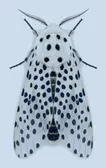
A related wood boring species that is usually smaller, at 35 to 60 mm, the leopard moth is white with dense black spots rather than mottled bark grey markings.
Questions
Is the Goat moth dangerous to people?
Rarely seen away from its host tree; both caterpillar and adult are harmless to people despite their strong goat like smell.
When can you see the Goat moth?
The Goat moth can be seen from April to October, at night.
Plate retouched from a photo by Dr. F. Nemos, Public domain, Wikimedia Commons Public domain
Report a mistake in this entry
Butterflies and moths›Carpenter moths›Cossus
Last updated 2026-09-26. Every entry is checked against published sources.