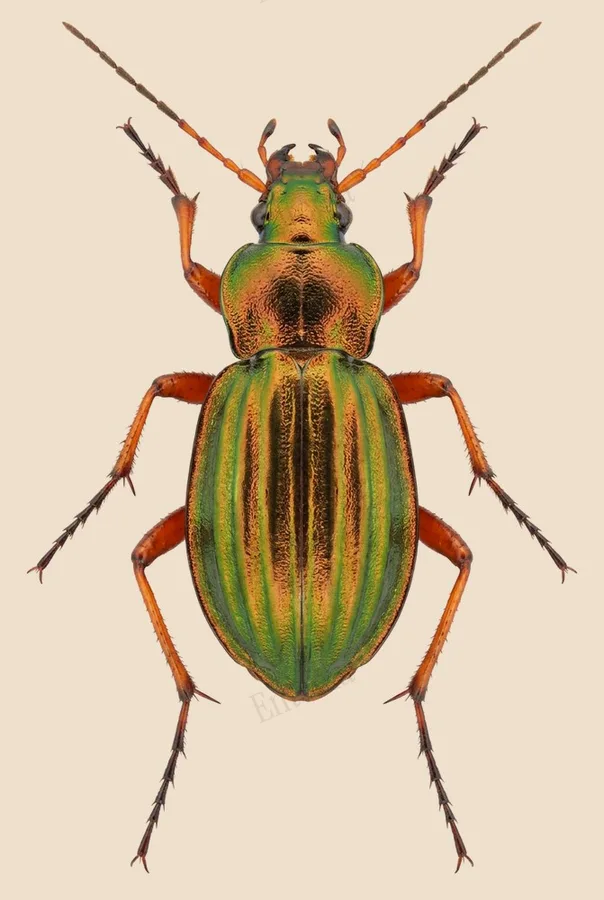
Golden ground beetle
This iridescent green-gold ground beetle sprays captured slugs and caterpillars with digestive fluid before eating them, helping protect crops such as potatoes from pests.
| Where | Fields, hedgerows and garden edges |
|---|---|
| Size | 17 to 20 mm body length |
| When | April to July |
The Golden ground beetle has a shining, iridescent green to coppery-gold body with three broad ridges running along each wing case, and orange legs, antennae and mouthparts that stand out against the metallic sheen.
Active by day in fields, hedgerows and gardens on loamy soil, it hunts earthworms, slugs, snails and caterpillars, injecting them with digestive secretions before feeding. Adults emerge in autumn, overwinter under stones or moss, and can live for around two years.
Traits
Habitat
Farmland
Colour
Green, Metallic, Orange
Active
Day
To people
Preys on slugs and crop pests such as the Colorado potato beetle; harmless to people.
Activity through the year
Often confused with
Similar in size at about 18 to 32 mm, but has mostly black legs with red femora and a narrower, reddish-copper thorax, unlike the pale orange legs of the Golden ground beetle.
Questions
Is the Golden ground beetle dangerous to people?
Preys on slugs and crop pests such as the Colorado potato beetle; harmless to people.
When can you see the Golden ground beetle?
The Golden ground beetle can be seen from April to July, by day.
Plate retouched from a photo by Didier Descouens, CC BY‑SA 3.0, Wikimedia Commons Licence
The plate on this page is shared under the same licence as its source, CC BY-SA.
Report a mistake in this entry
Beetles›Ground beetles›Carabus
Last updated 2026-09-26. Every entry is checked against published sources.