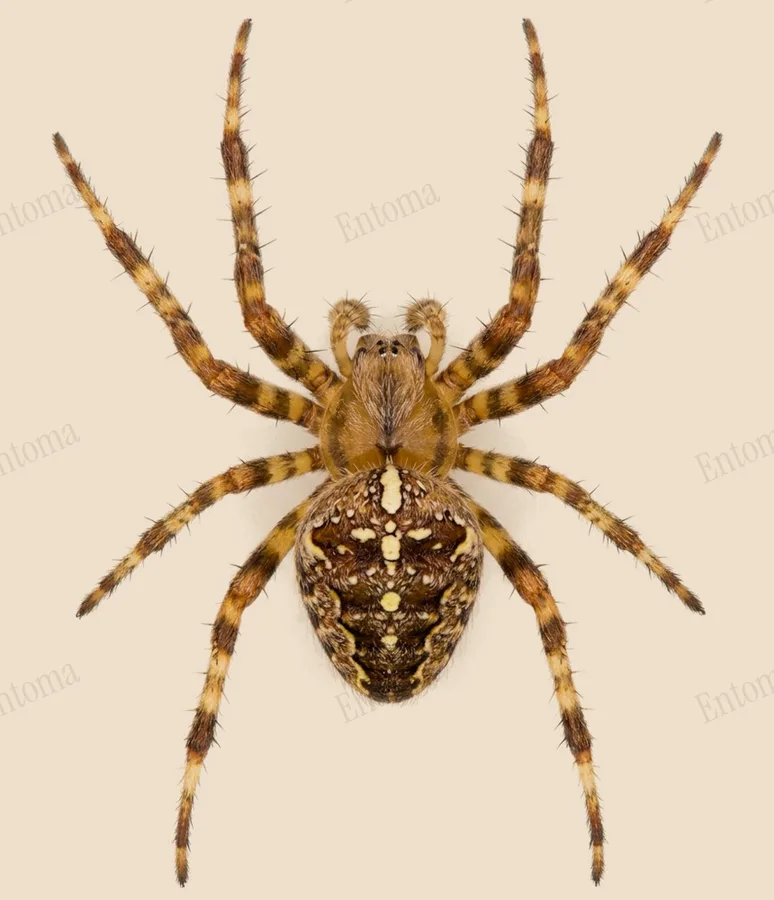
Cross orbweaver
This orb weaver often eats its own web at dusk and spins a new one before dawn, recycling the silk's proteins.
| Where | Gardens, hedgerows and forest edges |
|---|---|
| Size | Female 6.5 to 22.5 mm, male 4 to 13 mm body length |
| When | June to October |
Body colour ranges from pale yellow to deep brown or almost black, but nearly every adult carries a bold white cross of dots across the top of the abdomen, giving the species its common name. The banded legs and stout, rounded body make it one of the most familiar orb weavers of gardens and hedgerows.
Females rebuild their orb web after dark most nights, eating the old sticky spiral before spinning a new one, then spend the day motionless at the hub waiting to feel a vibration in the threads. After mating, the female produces a single yellow egg sac that overwinters, with spiderlings emerging the following spring.
Traits
Habitat
Garden
Colour
Brown, White, Black
Active
Day and night
To people
This spider is not dangerous to people and rarely bites even when handled; it usually just retreats into its web.
Activity through the year
Often confused with
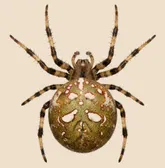
Similar in size and web building habit, but it carries four bold white spots arranged in a square rather than a cross on the abdomen, and often adds a silk retreat to one side of the web that the cross orbweaver does not build.
Questions
Is the Cross orbweaver dangerous to people?
This spider is not dangerous to people and rarely bites even when handled; it usually just retreats into its web.
When can you see the Cross orbweaver?
The Cross orbweaver can be seen from June to October, by day and at night.
Plate retouched from a photo by ben142, CC0, iNaturalist Licence
Report a mistake in this entry
Spiders›Orb-weaver spiders›Araneus
Last updated 2026-09-27. Every entry is checked against published sources.