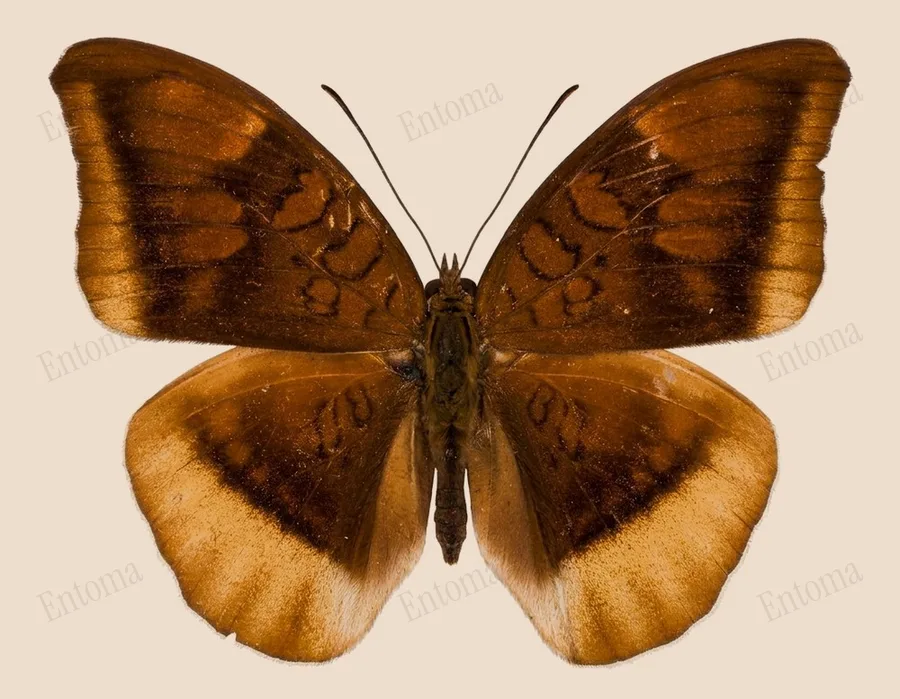
Grey count
The Grey count is a fruit-feeding forest butterfly, more often seen sipping juice from fermenting fallen fruit or tree sap than visiting flowers for nectar in a garden.
| Where | Moist forests and shaded gardens |
|---|---|
| Size | 65 to 75 mm wingspan |
| When | July to May |
The Grey count is a dark brown nymphalid with black transverse lines and a continuous ash grey band running along the wing margins; females are paler, with the pale band bordered narrowly in brown.
Caterpillars feed on Careya and Planchonia trees in the family Lecythidaceae, and adults are fruit feeders, favouring moist forest and heavily shaded forest gardens across the lower Himalaya, the Western Ghats and into the Malay Peninsula.
Traits
Habitat
Woodland
Colour
Brown, Grey
Active
Day
To people
Settles on tree trunks and fallen fruit rather than people; safe to observe.
Activity through the year
Often confused with
Males show a blue-black iridescent upperside rather than the dark brown ground colour and continuous ash grey band of the Grey count; females of both species are duller brown and are best told apart by the tone of the pale band.
Questions
Is the Grey count dangerous to people?
Settles on tree trunks and fallen fruit rather than people; safe to observe.
When can you see the Grey count?
The Grey count can be seen from July to May, by day.
Plate retouched from a museum specimen photo by Swiss Natural History Collections - SwissNatColl, CC BY 4.0, GBIF Licence
Report a mistake in this entry
Butterflies and moths›Brush-footed butterflies›Tanaecia
Last updated 2026-09-27. Every entry is checked against published sources.