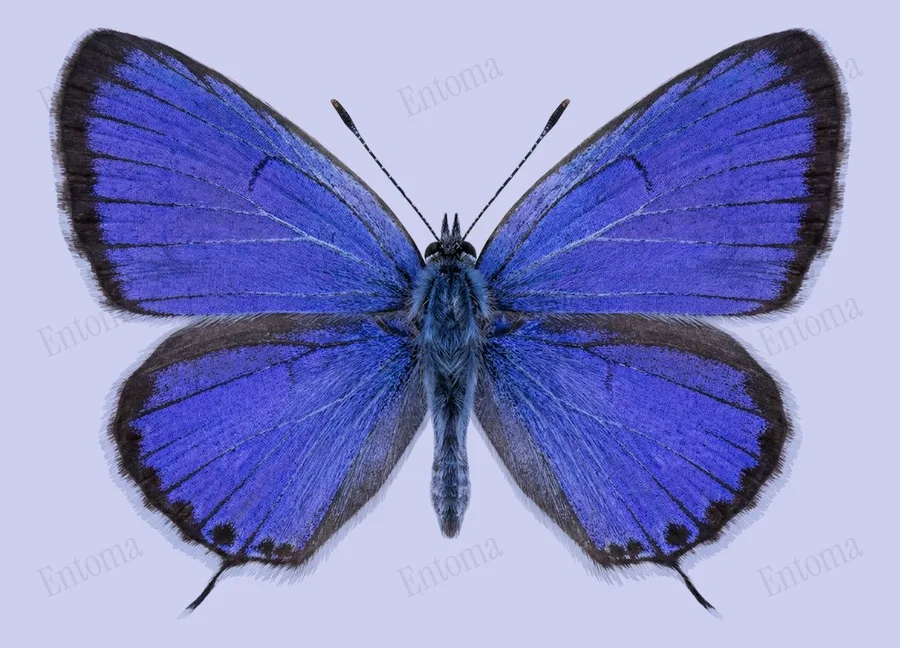
Zebra blue
The zebra blue is named for the bold white and brown stripes on its hindwing underside, and its caterpillars feed on plumbago flowers and buds.
| Where | Gardens where plumbago grows |
|---|---|
| Size | 28 to 30 mm wingspan |
| When | January to December |
The zebra blue is a small blue named for the bold white and brown banding on its hindwing underside, arranged as three spots near the wing base and a distinctive three-lobed spot further out; males are dark violet blue above, while females show broader white areas edged with black.
Caterpillars feed on the flowers and buds of plumbago and on various legumes, developing through wet season and dry season broods that differ slightly in colour, and adults are often seen visiting flowers in gardens where their host plants grow.
Traits
Habitat
Garden
Colour
Blue, White, Brown
Active
Day
To people
Not known to bite or sting people.
Activity through the year
Often confused with
Underside shows fine white lunules and rings rather than the zebra blue's bold interlocking white and brown stripe bands and three-lobed spot.
Questions
Is the Zebra blue dangerous to people?
Not known to bite or sting people.
When can you see the Zebra blue?
The Zebra blue can be seen from January to December, by day.
Plate retouched from a museum specimen photo by Swiss Natural History Collections - SwissNatColl, CC BY 4.0, GBIF Licence
Report a mistake in this entry
Butterflies and moths›Blues and coppers›Leptotes
Last updated 2026-09-27. Every entry is checked against published sources.