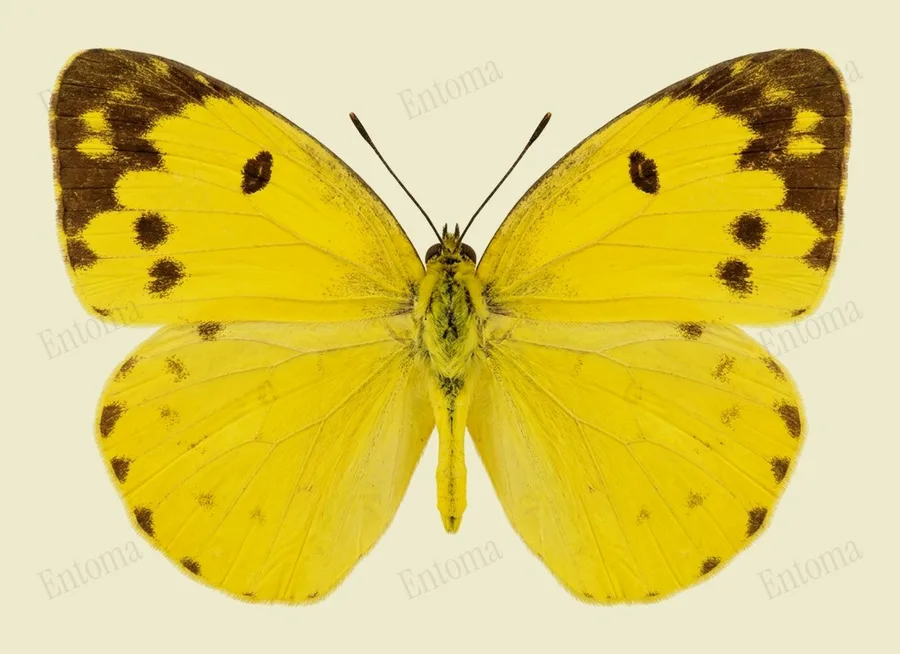
Three-spotted grass yellow
Underneath, the Three-spotted grass yellow shows three small spots and a larger fourth spot in the forewing cell, the feature that separates it from other grass yellow butterflies.
| Where | Open forests, gardens and scrub |
|---|---|
| Size | 35 to 45 mm wingspan |
| When | January to December |
The Three-spotted grass yellow is deep lemon yellow above, with a black forewing border that is deeply scalloped between the veins; below, the wings are pale yellow with freckled brown spots and a reddish brown patch near the forewing tip.
Three small spots sit in the forewing cell on the underside, alongside the usual discocellular mark, and caterpillars feed on plants in the pea family; adults fly year round through open forest, gardens and scrub.
Traits
Habitat
Woodland
Colour
Yellow, Brown
Active
Day
To people
A common garden visitor that does not sting or bite; safe to observe up close.
Activity through the year
Often confused with
Underside forewing cell carries only two small spots plus one larger reniform spot, compared with three small spots and a larger fourth spot in the Three-spotted grass yellow.
Questions
Is the Three-spotted grass yellow dangerous to people?
A common garden visitor that does not sting or bite; safe to observe up close.
When can you see the Three-spotted grass yellow?
The Three-spotted grass yellow can be seen from January to December, by day.
Plate retouched from a museum specimen photo by Swiss Natural History Collections - SwissNatColl, CC BY 4.0, GBIF Licence
Report a mistake in this entry
Butterflies and moths›Whites and yellows›Eurema
Last updated 2026-09-27. Every entry is checked against published sources.