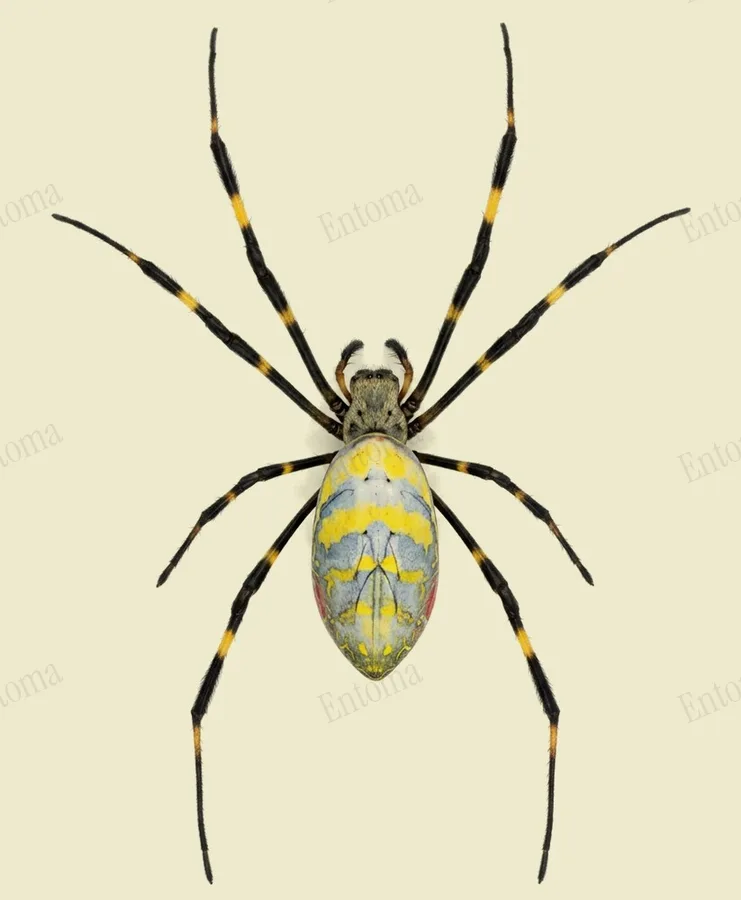
Joro spider
Since arriving from East Asia in the 2010s, this spider has spread across the eastern United States, spinning golden webs that can exceed one meter across.
| Where | Suburban yards across the eastern United States |
|---|---|
| Size | Female 17 to 25 mm, male 7 to 10 mm body length |
| When | July to November |
The Joro spider is a large orb weaver with a blue black and yellow banded abdomen and a red marking on its underside. Females greatly outsize males and spin large golden tinted webs between trees, porches and utility poles.
First established in Georgia and confirmed by 2014, it has since spread through several nearby states and tolerates suburban yards and roadsides as readily as forest edges. Its fangs rarely break human skin, and when disturbed it typically freezes in place rather than attacking.
Traits
Habitat
Towns
Colour
Black, Yellow, Red
Active
Day and night
To people
Mild
Very unlikely to bite, and when it does the effect is mild and brief, similar to a mosquito bite, with local redness and swelling settling within a day.
Activity through the year
Often confused with
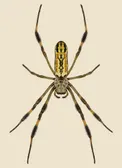
Similar golden webs and size, but its legs carry black hair tufts near the joints that the Joro spider lacks, and its abdomen is orange brown with rows of white yellow spots rather than blue black and yellow bands.
Questions
Is the Joro spider dangerous to people?
Mild. Very unlikely to bite, and when it does the effect is mild and brief, similar to a mosquito bite, with local redness and swelling settling within a day.
When can you see the Joro spider?
The Joro spider can be seen from July to November, by day and at night.
Plate retouched from a photo by Amit Naik, CC BY 4.0, iNaturalist Licence
Report a mistake in this entry
Spiders›Orb-weaver spiders›Trichonephila
Last updated 2026-09-27. Every entry is checked against published sources.