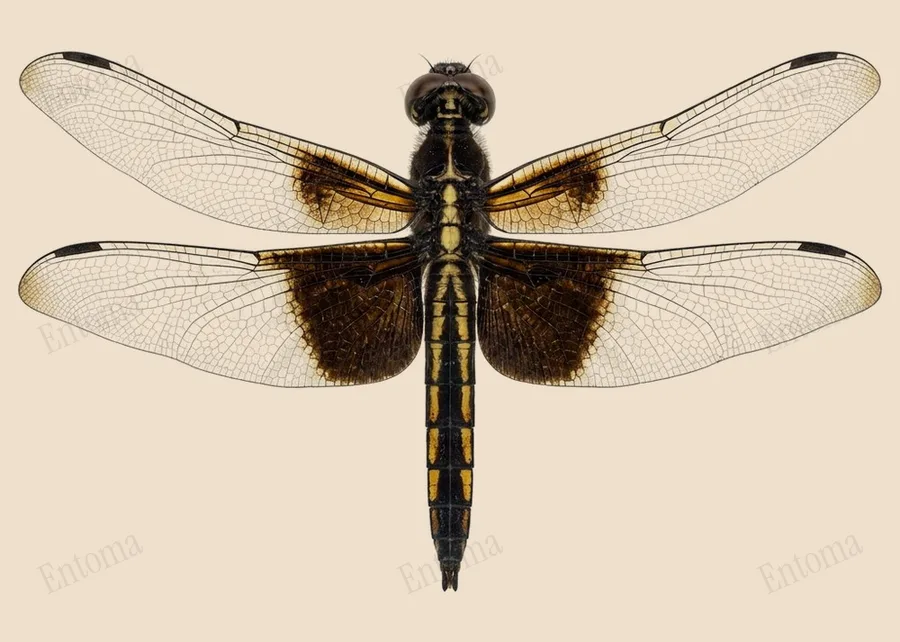
Widow skimmer
Mature males develop a pale, powdery frost over parts of their dark wing patches, a coating that only forms after several days in adult life.
| Where | Ponds, lakes, and marsh edges |
|---|---|
| Size | 42 to 50 mm body length |
| When | May to September |
The Widow skimmer is a bulky dragonfly with a broad dark patch at the base of each wing; mature males add white patches beyond the dark bands and a pale blue body, while females and young males have plain wingtips and a brown and yellow striped abdomen.
Aquatic nymphs live underwater for months to a few years, hunting other small aquatic animals, before climbing out onto shoreline plants to shed their skin a final time and emerge as flying adults.
Traits
Habitat
Wetland
Colour
Black, Blue, Brown
Active
Day
To people
Does not sting or bite; hunts small flying insects over open water and nearby fields.
Activity through the year
Often confused with
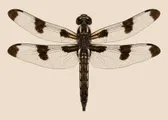
Close in size, but males of the Twelve-spotted skimmer show twelve black wing patches alternating with eight white spots, while male Widow skimmers have only a dark basal patch and a separate white patch on each wing, without the alternating twelve-and-eight pattern.
Questions
Is the Widow skimmer dangerous to people?
Does not sting or bite; hunts small flying insects over open water and nearby fields.
When can you see the Widow skimmer?
The Widow skimmer can be seen from May to September, by day.
Plate retouched from a photo by Mark Holmes, CC BY‑SA 4.0, iNaturalist Licence
The plate on this page is shared under the same licence as its source, CC BY-SA.
Report a mistake in this entry
Dragonflies and damselflies›Skimmers›Libellula
Last updated 2026-09-26. Every entry is checked against published sources.