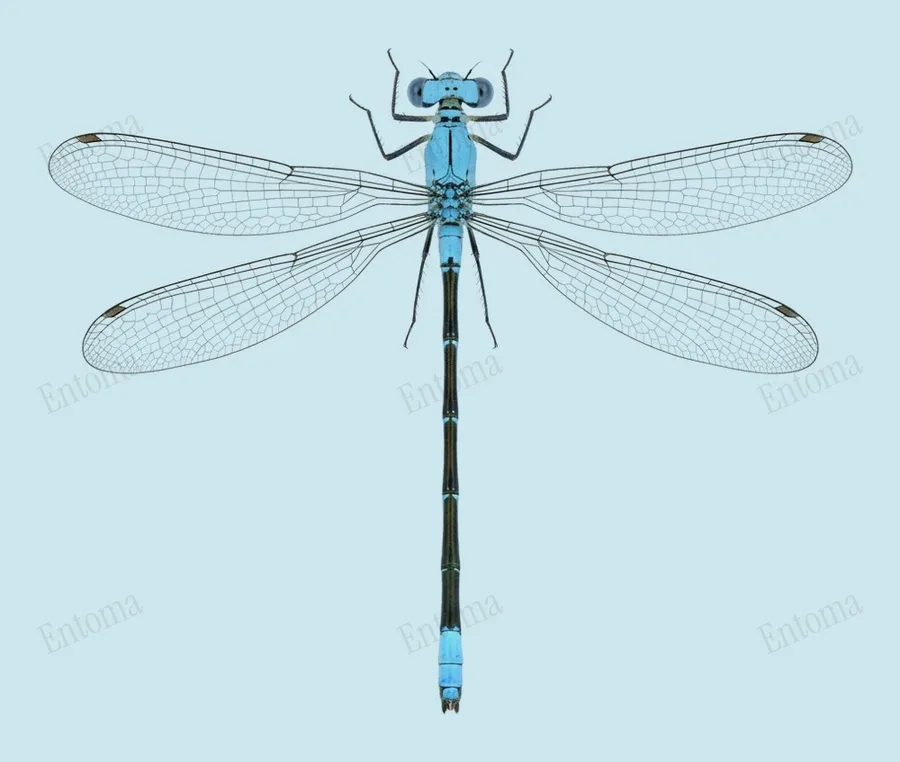
Blue-fronted dancer
Males can switch their thorax colour between bright blue and grey black, sometimes changing eight times within twelve days for reasons still unclear.
| Where | Muddy rivers and larger streams |
|---|---|
| Size | 33 to 40 mm body length |
| When | May to September |
The Blue-fronted dancer is a slender damselfly with a bright blue face, thorax and abdomen tip in most males, though some males are grey black instead and can switch between the two colours over the course of days. Females appear in blue, brown or greenish forms and lack the male's blue abdomen tip.
Adults perch low along muddy rivers and larger streams, where males defend short stretches of bank and mating pairs can remain joined for up to half an hour. After mating, pairs fly together for up to an hour before females lay eggs on floating or submerged vegetation.
Traits
Habitat
Wetland
Colour
Blue, Black, Brown
Active
Day
To people
Rests on shoreline vegetation and logs; harmless to people.
Activity through the year
Often confused with
Similar in size at about 38 to 43 mm, but the male has a chalky white thorax with dark stripes rather than the bright blue thorax of the Blue-fronted dancer.
Questions
Is the Blue-fronted dancer dangerous to people?
Rests on shoreline vegetation and logs; harmless to people.
When can you see the Blue-fronted dancer?
The Blue-fronted dancer can be seen from May to September, by day.
Plate retouched from a photo by glennberry, CC0, iNaturalist Licence
Report a mistake in this entry
Dragonflies and damselflies›Narrow-winged damselflies›Argia
Last updated 2026-09-26. Every entry is checked against published sources.