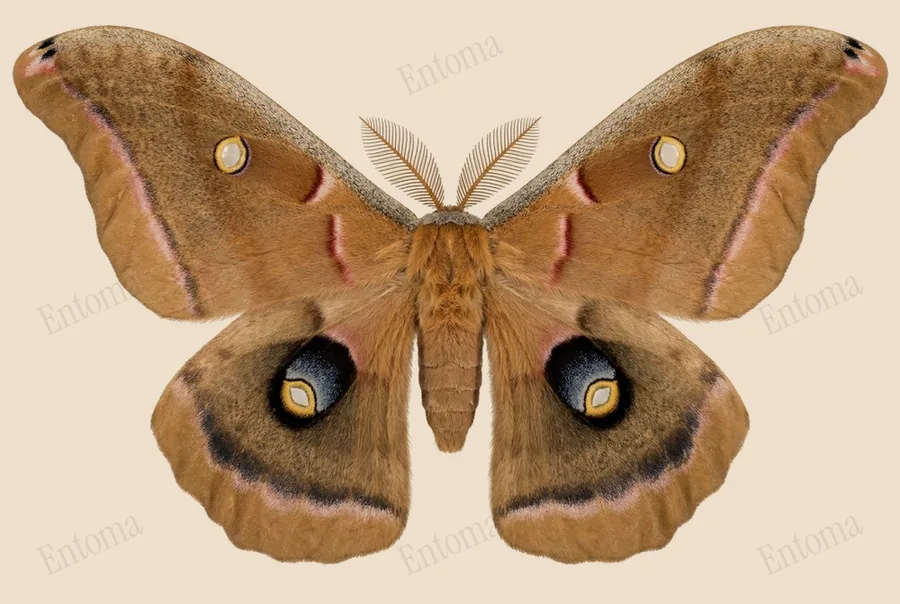
Polyphemus moth
Each hindwing carries a large eyespot that can be flashed suddenly to startle a bird in mid-attack.
| Where | Deciduous woodland, orchards, and wetlands |
|---|---|
| Size | 100 to 150 mm wingspan |
| When | March to October |
The Polyphemus moth is a large, warm tan to reddish-brown moth with a big, purplish-blue and black eyespot ringed in yellow on each hindwing, and smaller, less complete eyespots on the forewings.
Caterpillars feed on the leaves of oak, birch, maple, hickory, and several other trees, and the pupa spins a tough, oval cocoon that can enter a dormant state to survive winter, with populations in the far north producing only a single generation a year.
Traits
Habitat
Woodland
Colour
Brown, Yellow
Active
Night
To people
Attracted to light; the caterpillar has no stinging hairs and cannot sting or bite.
Activity through the year
Often confused with
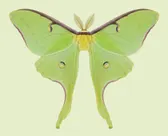
Both are large native silk moths, but the Luna moth is pale green with long trailing tails on the hindwings and no large hindwing eyespots, while the Polyphemus moth is tan to brown with prominent blue and black eyespots and no tails.
Questions
Is the Polyphemus moth dangerous to people?
Attracted to light; the caterpillar has no stinging hairs and cannot sting or bite.
When can you see the Polyphemus moth?
The Polyphemus moth can be seen from March to October, at night.
Plate retouched from a photo by SA Somers, CC BY‑SA 4.0, iNaturalist Licence
The plate on this page is shared under the same licence as its source, CC BY-SA.
Report a mistake in this entry
Butterflies and moths›Emperor moths›Antheraea
Last updated 2026-09-26. Every entry is checked against published sources.