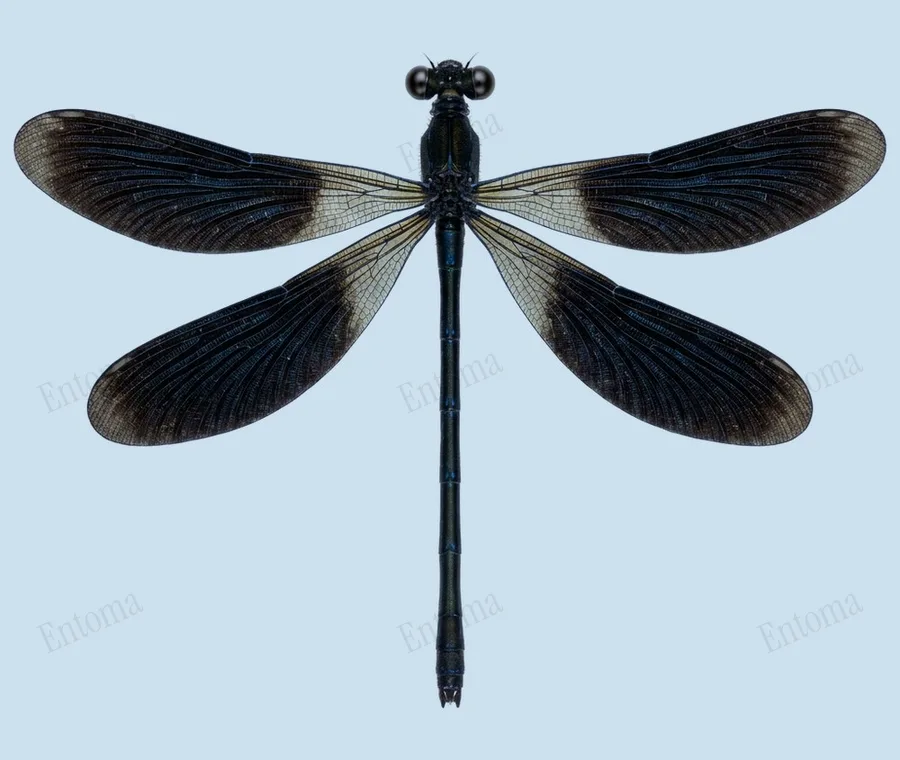
Psolodesmus mandarinus
This damselfly's wing colour changes with latitude, so populations from different parts of the same island can look almost like separate species.
| Where | Shaded mountain streams |
|---|---|
| Size | 54 to 68 mm body length |
| When | April to November |
This broad winged damselfly has a glossy green head and thorax, and the wings carry black, white and brown bands whose pattern and width shift gradually between northern and southern populations of the same species. Females carry a proportionally larger abdomen than males.
Adults perch and fly low over shaded, fast running mountain streams, where the aquatic larvae develop among stones and submerged roots. The two recognised subspecies replace each other along a north to south gradient rather than overlapping widely.
Traits
Habitat
Wetland
Colour
Green, Black, Brown
Active
Day
To people
Harmless to people; does not bite or sting.
Activity through the year
Often confused with
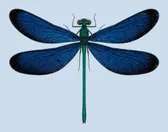
Males have solid metallic blue wings without the black, white and brown banding pattern that crosses the wings of this species.
Questions
Is Psolodesmus mandarinus dangerous to people?
Harmless to people; does not bite or sting.
When can you see Psolodesmus mandarinus?
Psolodesmus mandarinus can be seen from April to November, by day.
Plate retouched from a photo by 張家瑜, CC BY 4.0, iNaturalist Licence
Report a mistake in this entry
Dragonflies and damselflies›Demoiselles›Psolodesmus
Last updated 2026-09-27. Every entry is checked against published sources.