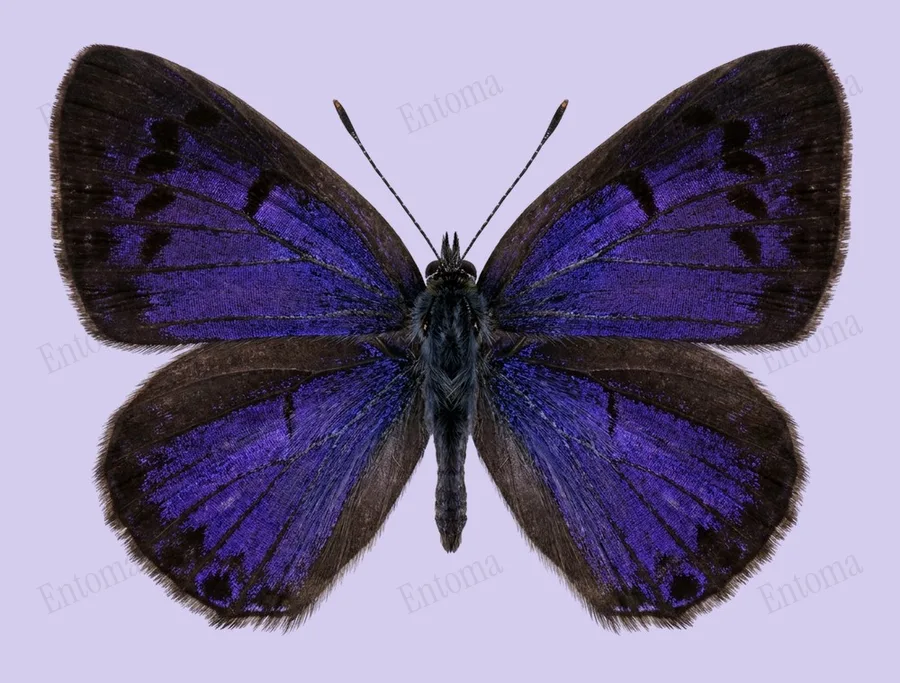
Common line blue
Females of this small blue butterfly lay their eggs deep inside tightly packed flower buds instead of on leaves, an unusual habit among lineblue butterflies.
| Where | Forest edges across South and Southeast Asia |
|---|---|
| Size | 20 to 28 mm wingspan |
| When | March to November |
The common line blue is a small lycaenid with a wingspan of about 20 to 28 mm. Males are purplish brown above, while females are brownish purple with an iridescent blue sheen toward the wing bases, and both sexes carry a short white tipped tail on each hindwing.
Caterpillars feed only on the flower buds and young inflorescences of pea family and soapberry family plants, and adults are usually seen low down around forest edges and clearings where these host plants grow.
Traits
Habitat
Woodland
Colour
Brown, Blue
Active
Day
To people
Small and easily overlooked; not reported to bite or sting.
Activity through the year
Often confused with
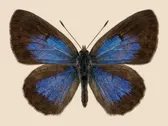
Lacks the small tail on the hindwing that the common line blue has, and its black tornal spot is ringed in orange rather than simply capped.
Questions
Is the Common line blue dangerous to people?
Small and easily overlooked; not reported to bite or sting.
When can you see the Common line blue?
The Common line blue can be seen from March to November, by day.
Plate retouched from a museum specimen photo by Swiss Natural History Collections - SwissNatColl, CC BY 4.0, GBIF Licence
Report a mistake in this entry
Butterflies and moths›Blues and coppers›Prosotas
Last updated 2026-09-27. Every entry is checked against published sources.