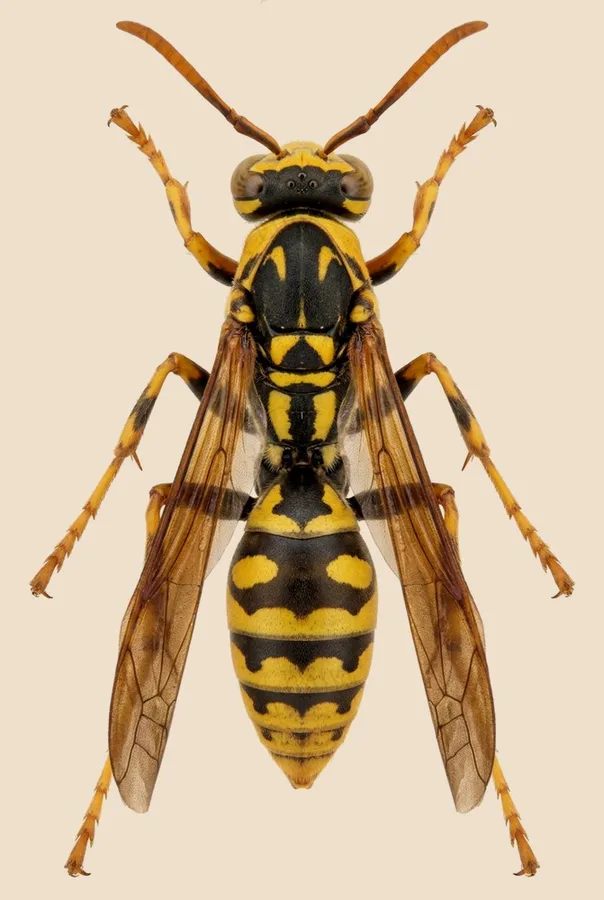
Rothney's paper wasp
Rothney's paper wasp builds an open, umbrella shaped comb with no outer envelope, leaving every developing grub in full view.
| Where | Gardens, shrubs and forest edges |
|---|---|
| Size | 20 to 26 mm body length |
| When | April to October |
Rothney's paper wasp is a slender, narrow waisted wasp with extensively yellow legs and face marked against a reddish brown and black body. Colonies build a single, open faced paper comb without a protective outer covering.
Workers feed on nectar and hunt small insects to provision the brood, and the whole colony defends the comb vigorously if it is disturbed. A colony that was accidentally disturbed has been recorded delivering more than one hundred stings in a single defensive response.
Traits
Habitat
Garden
Colour
Yellow, Brown, Black
Active
Day
To people
Take care
Only females can sting; they defend the nest vigorously when disturbed, and a sting causes sharp, immediate pain and swelling that usually fades within a day or two.
Activity through the year
Often confused with
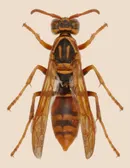
Japanese paper wasp has a mostly black body with limited yellow on the legs, while Rothney's paper wasp shows much more extensive yellow across the legs and face.
Questions
Is the Rothney's paper wasp dangerous to people?
Take care. Only females can sting; they defend the nest vigorously when disturbed, and a sting causes sharp, immediate pain and swelling that usually fades within a day or two.
When can you see the Rothney's paper wasp?
The Rothney's paper wasp can be seen from April to October, by day.
Plate retouched from a photo by げっとり, CC BY 4.0, iNaturalist Licence
Report a mistake in this entry
Bees, wasps and ants›Wasps and hornets›Polistes
Last updated 2026-09-27. Every entry is checked against published sources.