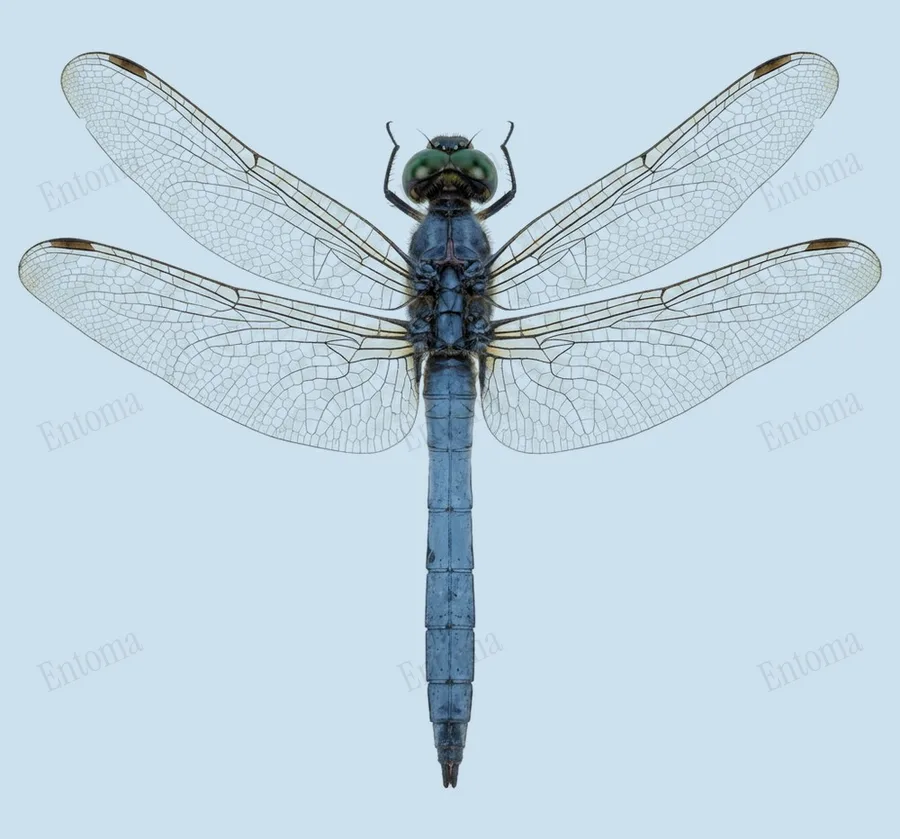
Blue marsh hawk
Young male Blue marsh hawks emerge yellowish and only turn powdery blue as they age, a slow colour change as pale, waxy pruinescence gradually forms over the body.
| Where | Forest streams, marshes and canals |
|---|---|
| Size | 28 to 35 mm abdomen length |
| When | April to December |
Mature males are powdery blue over the thorax and most of the abdomen, with the last two segments black, a dark face and greenish blue eyes, while females and young males are yellowish with brown side stripes.
It breeds in marshes and slow streams shaded by forest, and adults spend long spells resting on sunlit boulders and rocks beside the water before darting out to intercept passing insects.
Traits
Habitat
Wetland
Colour
Blue, Black, Yellow
Active
Day
To people
Rests on sunlit rocks and perches near water; does not bite or sting people.
Activity through the year
Often confused with
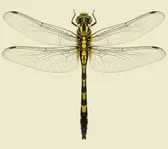
Greyish green with black abdominal markings and no blue pruinescence, unlike the powdery blue thorax and abdomen of a mature male Blue marsh hawk.
Questions
Is the Blue marsh hawk dangerous to people?
Rests on sunlit rocks and perches near water; does not bite or sting people.
When can you see the Blue marsh hawk?
The Blue marsh hawk can be seen from April to December, by day.
Plate retouched from a photo by portioid, CC BY 4.0, iNaturalist Licence
Report a mistake in this entry
Dragonflies and damselflies›Skimmers›Orthetrum
Last updated 2026-09-27. Every entry is checked against published sources.