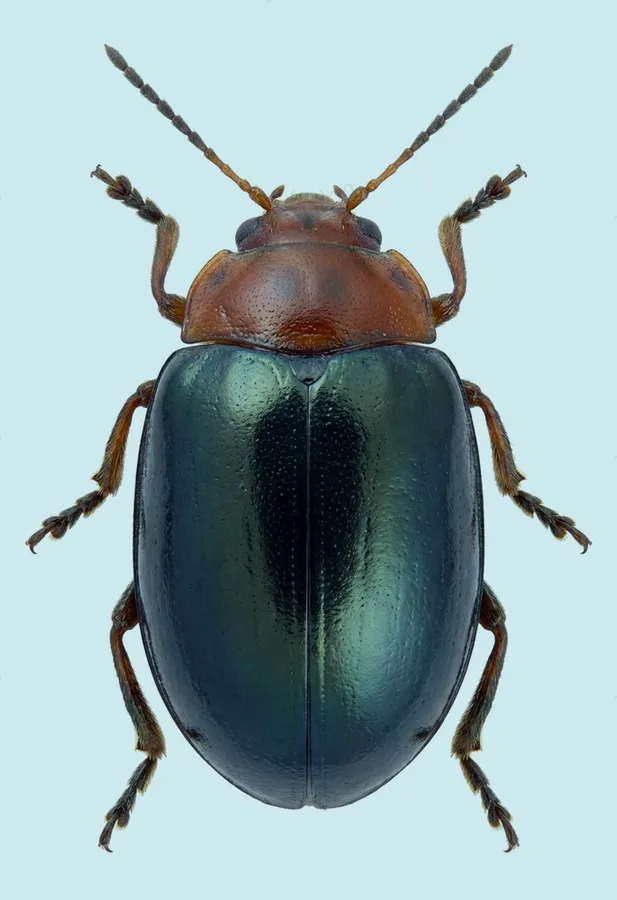
Morphosphaera chrysomeloides
This leaf beetle's larvae feed together in groups on young fig leaves, then scatter to feed alone once they reach their final larval stage.
| Where | Fig trees in parks and gardens |
|---|---|
| Size | 7.0 to 8.5 mm body length |
| When | January to July |
This beetle has a glossy black head and wing cases and a yellowish brown pronotum marked with four black spots in a row, giving it a boldly patterned, rounded shape.
Both larvae and adults feed on the leaves of fig trees, and females lay clusters of pale eggs on young leaves; young larvae feed together in groups before older larvae disperse to feed alone and pupate in the soil.
Traits
Habitat
Garden
Colour
Black, Brown, Yellow
Active
Day
To people
Not known to bite, sting or irritate skin; often seen on fig leaves in parks and gardens.
Activity through the year
Often confused with
A smaller fig-feeding relative from higher elevations, with only two large black spots on the pronotum instead of four, and a bluish metallic sheen on the elytra rather than plain black.
Questions
Is Morphosphaera chrysomeloides dangerous to people?
Not known to bite, sting or irritate skin; often seen on fig leaves in parks and gardens.
When can you see Morphosphaera chrysomeloides?
Morphosphaera chrysomeloides can be seen from January to July, by day.
Plate retouched from a photo by Hannah Freedman, CC BY 4.0, iNaturalist Licence
Report a mistake in this entry
Beetles›Leaf beetles›Morphosphaera
Last updated 2026-09-27. Every entry is checked against published sources.