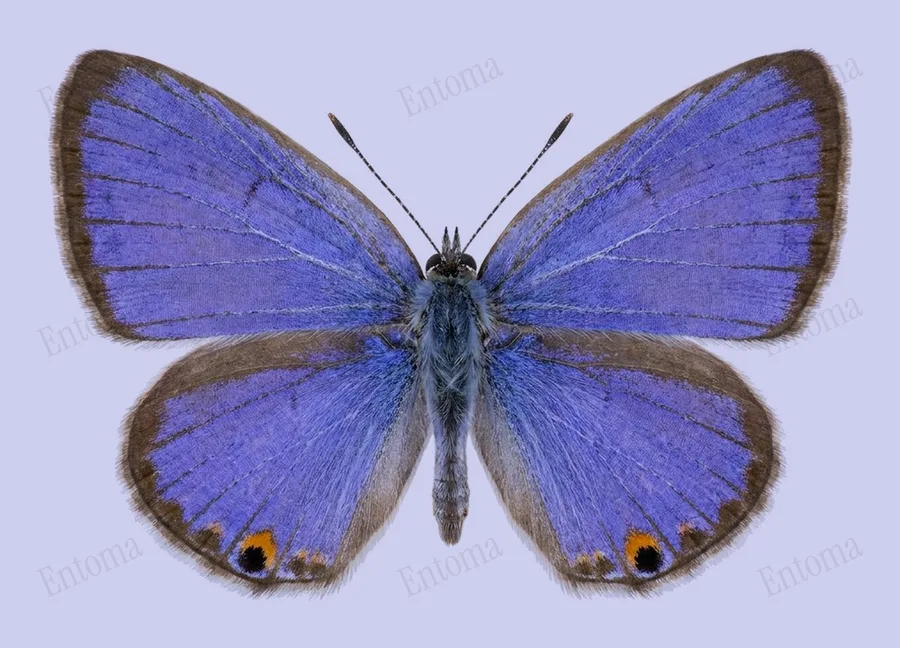
Plains cupid
This small blue butterfly breeds only on cycads, ancient plants whose leaves are toxic to most animals, and can complete its life cycle in under three weeks.
| Where | Gardens and parks planted with cycads |
|---|---|
| Size | 24 to 32 mm wingspan |
| When | April to November |
Males show an iridescent blue upperside with narrow black margins, while females are duller with more black. Both sexes have a grey brown underside marked with white edged brown bands and small orange spots near the tail.
Caterpillars feed on the new shoots of cycads and can quickly strip ornamental plants of young growth. Development from egg to adult can take as little as two to three weeks, allowing several generations each year without a true winter pause.
Traits
Habitat
Garden
Colour
Blue, Brown
Active
Day
To people
Basks with wings part open in sunny gardens; harmless to people.
Activity through the year
Often confused with
Lacks the short thread like tail on the hindwing that this species shows, and never has the small orange edged black spots near the tail corner of the hindwing underside.
Questions
Is the Plains cupid dangerous to people?
Basks with wings part open in sunny gardens; harmless to people.
When can you see the Plains cupid?
The Plains cupid can be seen from April to November, by day.
Plate retouched from a museum specimen photo by Finnish Museum of Natural History - Zoology Unit, CC BY 4.0, GBIF Licence
Report a mistake in this entry
Butterflies and moths›Blues and coppers›Luthrodes
Last updated 2026-09-27. Every entry is checked against published sources.