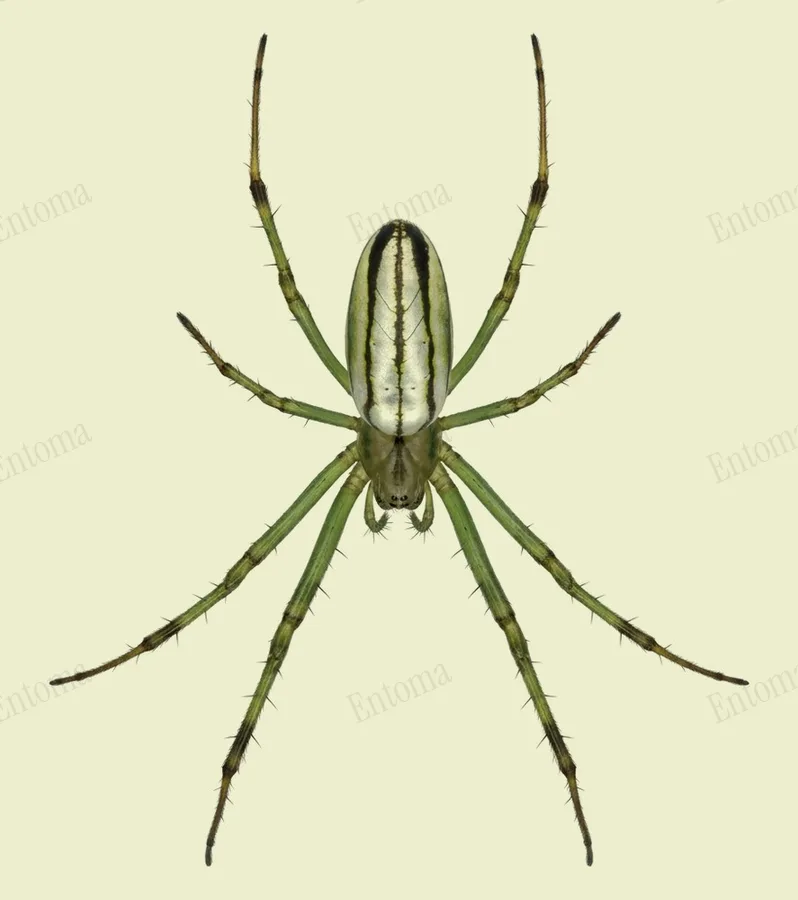
Black-striped orchard spider
Black-striped orchard spiders often build their slanted webs side by side in loose colonies, and help control insect pests in rice paddies and shrubby waterside vegetation across East Asia.
| Where | Paddy fields, waterside plants and shrubland |
|---|---|
| Size | Female 13 to 15 mm, male 8 to 12 mm body length |
| When | January to December |
The black-striped orchard spider has a white abdomen with yellow green flanks, marked off by black stripes and a further black stripe running down the middle of the back. It spins a web tilted at about 45 degrees, and neighbouring spiders often build their webs close together.
It lives around paddy fields, waterside plants and shrubland across China, Japan, Korea and other parts of East Asia, where it is considered a useful predator of small flying insects and other agricultural pests.
Traits
Habitat
Wetland
Colour
White, Green, Black
Active
Day and night
To people
This small spider is not known to bite people; if you walk through its web, it will simply rebuild it.
Activity through the year
Often confused with
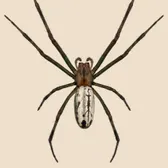
Nearly identical in size and colouring, but without the dense black hairs on the female's hind leg pair, and marked instead with a bold black stripe down the middle of the abdomen that Leucauge tessellata lacks.
Questions
Is the Black-striped orchard spider dangerous to people?
This small spider is not known to bite people; if you walk through its web, it will simply rebuild it.
When can you see the Black-striped orchard spider?
The Black-striped orchard spider can be seen from January to December, by day and at night.
Plate retouched from a photo by Dan Vickers, CC BY 4.0, iNaturalist Licence
Report a mistake in this entry
Spiders›Long-jawed orb weavers›Leucauge
Last updated 2026-09-27. Every entry is checked against published sources.