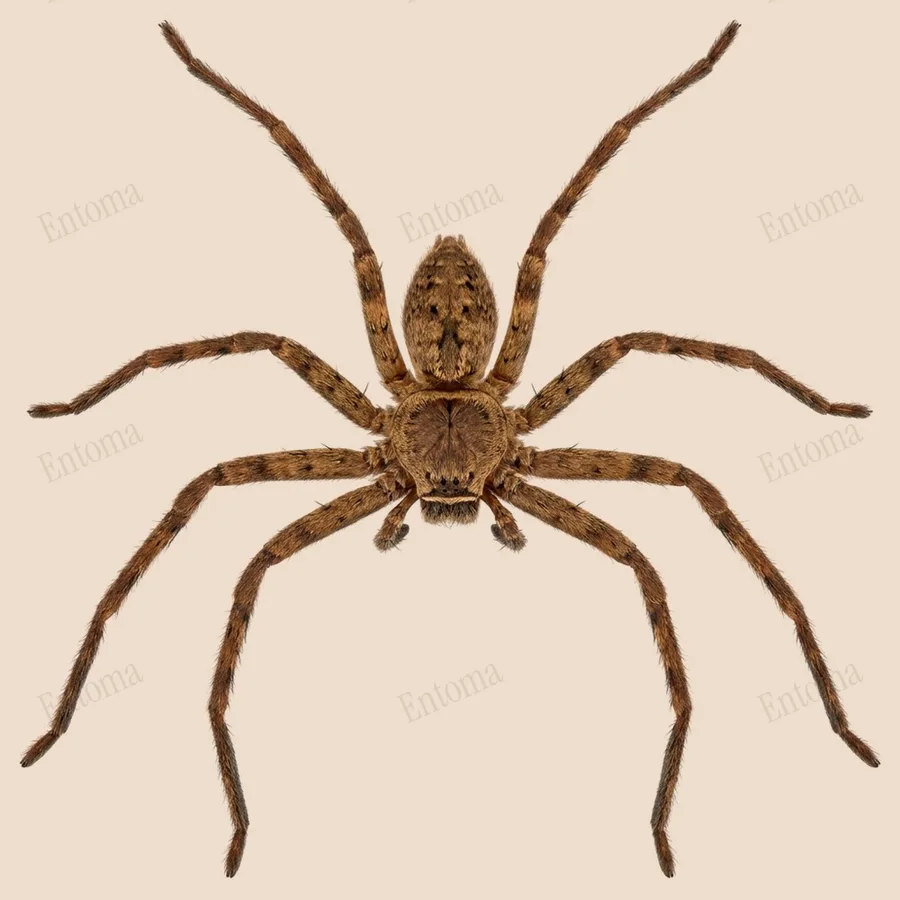
Pantropical huntsman spider
This huntsman spider hunts cockroaches by sight and speed rather than silk, and many Japanese households leave it alone because it helps clear the home of insect pests.
| Where | Houses, forests and bamboo groves |
|---|---|
| Size | Female 20 to 30 mm, male 10 to 25 mm body length |
| When | March to December |
The pantropical huntsman spider has a flattened brown body with a pale band across the front of the head and long, spreading legs that let it run sideways and down walls with equal ease. Females are bulkier than males, which have proportionally longer legs.
It hides in a crevice by day and hunts at night, chasing down cockroaches, moths and other insects without spinning a web to catch them. In Japan it is often tolerated indoors as a natural check on cockroach numbers.
Traits
Habitat
Towns
Colour
Brown
Active
Night
To people
Mild
Bites happen only if the spider is grabbed, and the result is brief local pain and swelling similar to a mosquito or bee sting, nothing more; if found indoors, it can be coaxed into a cup and released outside.
Activity through the year
Often confused with
Far smaller, 6 to 10 mm body length against the huntsman's 20 to 30 mm, with a yellowish brown longitudinal band down the back that the plain brown huntsman spider lacks.
Questions
Is the Pantropical huntsman spider dangerous to people?
Mild. Bites happen only if the spider is grabbed, and the result is brief local pain and swelling similar to a mosquito or bee sting, nothing more; if found indoors, it can be coaxed into a cup and released outside.
When can you see the Pantropical huntsman spider?
The Pantropical huntsman spider can be seen from March to December, at night.
Plate retouched from a photo by kcthetc1, CC0, iNaturalist Licence
Report a mistake in this entry
Spiders›Huntsman spiders›Heteropoda
Last updated 2026-09-27. Every entry is checked against published sources.