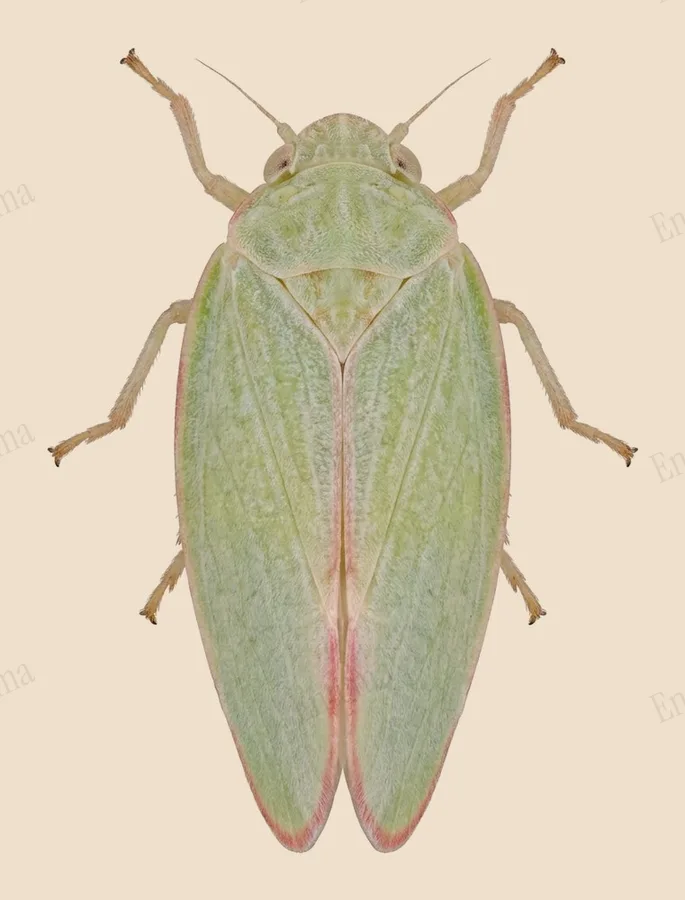
Geisha distinctissima
At rest, this planthopper folds its pale green wings into the shape of a small leaf fragment, camouflaging it on the citrus and persimmon trees it feeds on.
| Where | Citrus and persimmon trees across East Asia |
|---|---|
| Size | 5.5 to 7 mm body length |
| When | May to October |
This planthopper is 5.5 to 7 millimetres long with a pale green body, a yellowish head, and forewings edged in brown. At rest its wings fold roof-like over the body, giving it the look of a small green leaf fragment.
Nymphs and adults suck sap from citrus, persimmon, and other woody plants, occasionally spreading plant disease between them as they feed. It is found from lowland gardens to orchards across Japan, China, Korea, Taiwan, the Ryukyu Islands, and Vietnam, mostly in summer.
Traits
Habitat
Garden
Colour
Green, Brown
Active
Day
To people
Harmless to people; does not sting or bite.
Activity through the year
Often confused with
Distinctly larger, with dark brown to blackish wings dusted with green and marked by one bold white spot near the leading edge, unlike the plain pale green wings of this species.
Questions
Is Geisha distinctissima dangerous to people?
Harmless to people; does not sting or bite.
When can you see Geisha distinctissima?
Geisha distinctissima can be seen from May to October, by day.
Plate retouched from a photo by Forest Botial-Jarvis, CC BY 4.0, iNaturalist Licence
Report a mistake in this entry
True bugs›Flatid planthoppers›Geisha
Last updated 2026-09-27. Every entry is checked against published sources.