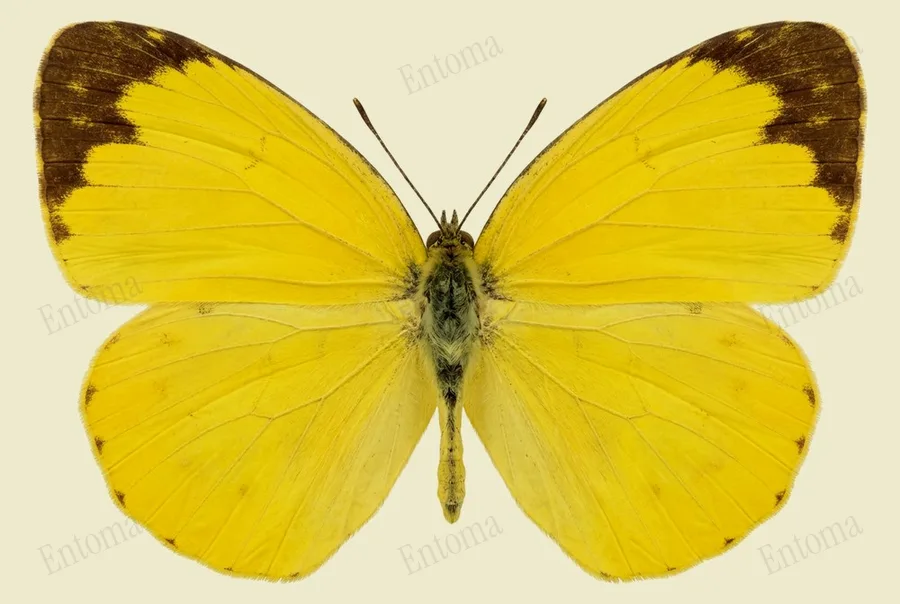
Japanese common grass yellow
Adults born in autumn overwinter and can fly again the following spring, while this species may produce five or six generations across a single year.
| Where | Meadows and grassy parks |
|---|---|
| Size | 20 to 27 mm forewing length |
| When | April to November |
Both forewings and hindwings are bright yellow with black borders that are broad in summer and reduced or nearly absent in the autumn form, with small dark brown spots on the underside.
Caterpillars feed on legumes such as silk tree and bush clover, and unlike many butterflies some autumn born adults survive the winter by sheltering among fallen leaves.
Traits
Habitat
Grassland
Colour
Yellow, Brown
Active
Day
To people
Harmless to people; adults feed at flowers and cause no harm if handled.
Activity through the year
Often confused with
Told apart by its white female form, since some females are pale whitish rather than yellow, a form the Japanese common grass yellow never shows.
Questions
Is the Japanese common grass yellow dangerous to people?
Harmless to people; adults feed at flowers and cause no harm if handled.
When can you see the Japanese common grass yellow?
The Japanese common grass yellow can be seen from April to November, by day.
Plate retouched from a museum specimen photo by Taiwan Biodiversity Research Institute, CC BY 4.0, GBIF Licence
Report a mistake in this entry
Butterflies and moths›Whites and yellows›Eurema
Last updated 2026-09-27. Every entry is checked against published sources.