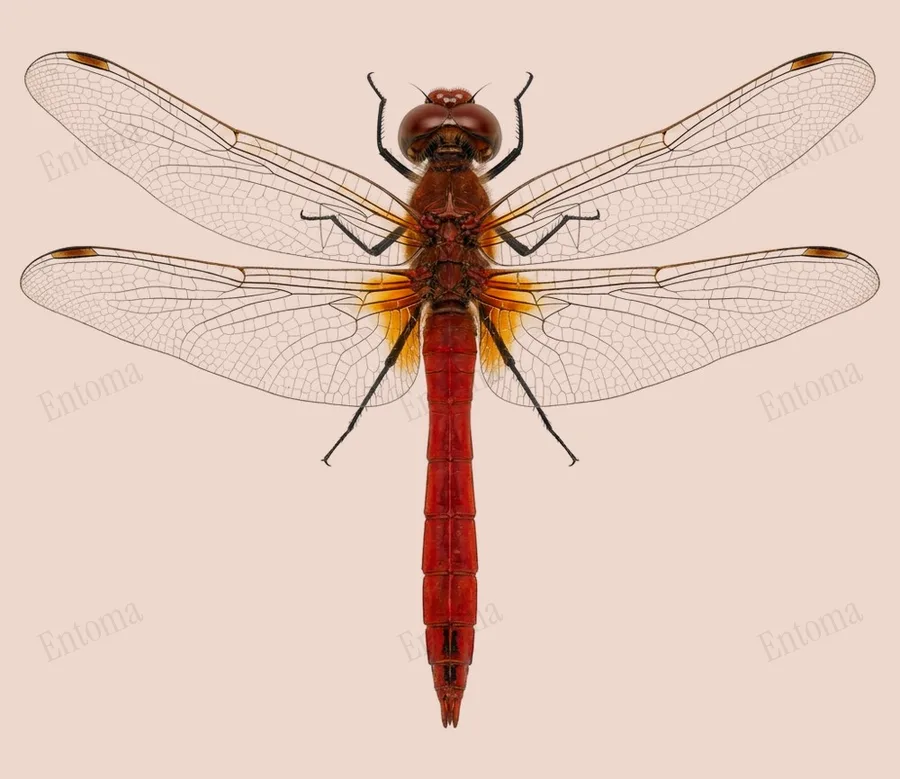
Ruddy darter
Males often bask with their wings angled down rather than held flat, an unusual posture that helps separate them from other darters at a glance.
| Where | Ponds, ditches and marshes with reeds |
|---|---|
| Size | 34 to 36 mm body length |
| When | June to September |
Males have a blood red, slightly club-shaped abdomen and entirely black legs; females and young males are ochre yellow with black markings.
Larvae develop in still, often weedy ponds and ditches, and adults spend much of the day perched on waterside reeds and rushes rather than flying far.
Traits
Habitat
Wetland
Colour
Red, Black, Yellow
Active
Day
To people
Harmless; does not sting or bite
Activity through the year
Often confused with
Common darter has yellow stripes on the legs and a less club-shaped abdomen, while the ruddy darter's legs are entirely black.
Questions
Is the Ruddy darter dangerous to people?
Harmless; does not sting or bite.
When can you see the Ruddy darter?
The Ruddy darter can be seen from June to September, by day.
Plate retouched from a photo by gailhampshire from Cradley, Malvern, U.K, CC BY 2.0, Wikimedia Commons Licence
Report a mistake in this entry
Dragonflies and damselflies›Skimmers›Sympetrum
Last updated 2026-09-26. Every entry is checked against published sources.