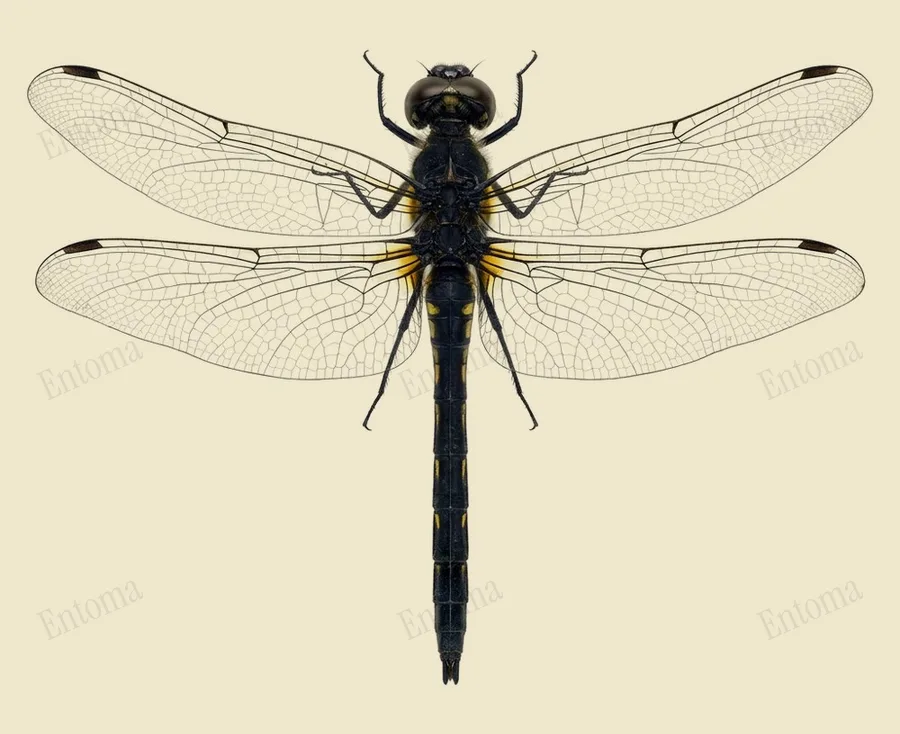
Black meadowhawk
Mature males of this dragonfly turn almost entirely black, unusual among small darters that are typically marked with red, orange, or yellow.
| Where | Acidic bogs and heathland pools |
|---|---|
| Size | 42 to 50 mm wingspan |
| When | June to October |
Mature males are almost entirely black across the head, thorax, and abdomen, while females and young males show a black and yellow pattern with a brown thorax. This all black look sets the species apart from other small darters in the same genus.
It breeds in shallow, acidic pools and ditches on heathland and moorland bogs, often among bog mosses and rushes. Adults fly from June to October, with most sightings concentrated in mid summer to early autumn.
Traits
Habitat
Heath
Colour
Black, Yellow
Active
Day
To people
Does not sting or bite; harmless to handle if caught.
Activity through the year
Often confused with
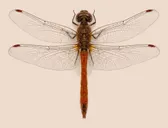
Noticeably larger, with a wingspan of about 48 to 60 mm and a red or brown body rather than the solid black of mature males.
Questions
Is the Black meadowhawk dangerous to people?
Does not sting or bite; harmless to handle if caught.
When can you see the Black meadowhawk?
The Black meadowhawk can be seen from June to October, by day.
Plate retouched from a museum specimen photo by Mati Marits, University of Tartu, Natural History Museum and Botanical Garden, CC BY 4.0, GBIF Licence
Report a mistake in this entry
Dragonflies and damselflies›Skimmers›Sympetrum
Last updated 2026-09-26. Every entry is checked against published sources.