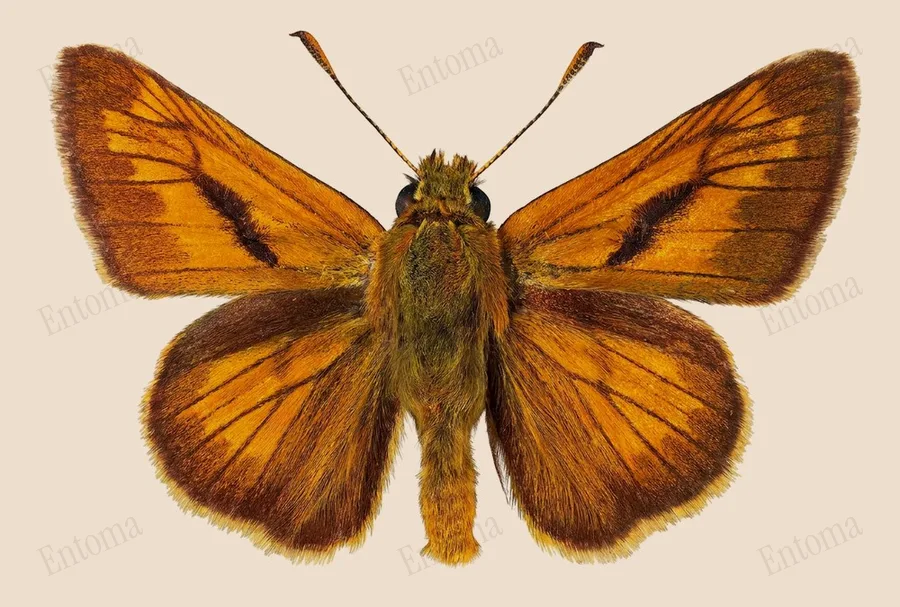
Large skipper
Males carry a dark, pheromone-releasing scent line across the forewing, and if morning patrols fail to find a mate they switch to perching and ambushing passing females instead.
| Where | Grassy hedgerows and woodland edges |
|---|---|
| Size | 28 to 35 mm wingspan |
| When | May to August |
It is orange-brown with darker brown borders and a faint checkered pattern across both wings, and its clubbed antennae end in a small hook. Males show a dark diagonal scent line across the middle of the forewing that females lack.
The caterpillar draws blades of coarse grass such as cocksfoot together with silk to build a shelter, hibernating half grown inside it before pupating the following spring.
Traits
Habitat
Grassland
Colour
Orange, Brown
Active
Day
To people
Harmless
Activity through the year
Often confused with
The small skipper is plain orange without the large skipper's checkered pattern or hooked antennae, and its wingspan of 25 to 30 mm runs smaller on average.
Questions
Is the Large skipper dangerous to people?
The Large skipper is harmless to people.
When can you see the Large skipper?
The Large skipper can be seen from May to August, by day.
Plate retouched from a photo by Didier Descouens, CC BY‑SA 4.0, Wikimedia Commons Licence
The plate on this page is shared under the same licence as its source, CC BY-SA.
Report a mistake in this entry
Butterflies and moths›Skippers›Ochlodes
Last updated 2026-09-26. Every entry is checked against published sources.