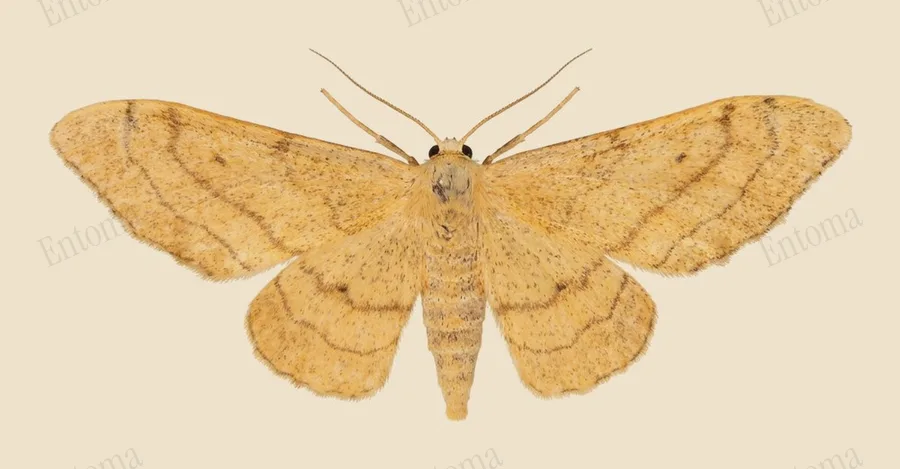
Riband wave
The riband wave flies in two distinct forms, one with a bold dark central band and one almost plain, occurring in roughly equal numbers.
| Where | Gardens, hedgerows, grassland |
|---|---|
| Size | 23 to 35 mm wingspan |
| When | June to October |
It is a small pale moth with a slender body and three fine cross-lines on the forewing; a darker band between two of these lines is strong in one form and nearly absent in the other.
Its caterpillars feed on low-growing plants such as dock and dandelion, and a second generation often appears in warmer regions during autumn.
Traits
Habitat
Grassland
Colour
Yellow, Brown
Active
Night
To people
Harmless.
Activity through the year
Often confused with
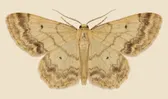
Small fan-footed wave is smaller and more uniformly pale, lacking the riband wave's broad central dark band in its typical form.
Questions
Is the Riband wave dangerous to people?
The Riband wave is harmless to people.
When can you see the Riband wave?
The Riband wave can be seen from June to October, at night.
Plate retouched from a photo by gailhampshire from Cradley, Malvern, U.K, CC BY 2.0, Wikimedia Commons Licence
Report a mistake in this entry
Butterflies and moths›Geometer moths›Idaea
Last updated 2026-09-26. Every entry is checked against published sources.