Leafy spurge hawkmoth
This hawkmoth's caterpillar feeds only on toxic spurges, yet research shows it detoxifies the plant's poison rather than storing it for its own chemical defence.
| Where | Open sunny grassland, dunes and waste ground |
|---|---|
| Size | 55 to 77 mm wingspan |
| When | May to October |
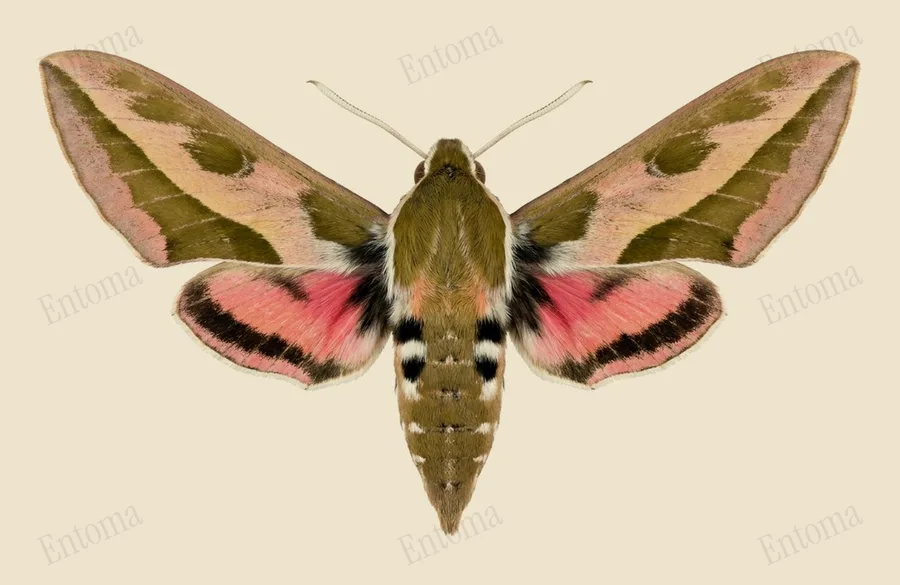
The leafy spurge hawkmoth is a large hawkmoth with olive-green forewings marked by a pale diagonal stripe and red hindwings bordered in black, while its caterpillar is boldly patterned in red, black, yellow and white. The caterpillar's warning colours advertise the toxic spurge plants it feeds on.
Despite feeding exclusively on toxic Euphorbia species, research shows the caterpillar breaks down the plant's phorbol ester poisons rather than storing them for its own defence. Two generations can occur in warm seasons, with adults flying from late spring into autumn.
Traits
Habitat
Grassland
Colour
Green, Red, Black
Active
Night
To people
Attracted to light after dark; harmless to people, though the caterpillar feeds on toxic spurge plants.
Activity through the year
Often confused with
Very similar in size at about 55 to 80 mm wingspan, but with less red on the hindwing and an unbroken olive band on the forewing, unlike the interrupted band of the leafy spurge hawkmoth.
Questions
Is the Leafy spurge hawkmoth dangerous to people?
Attracted to light after dark; harmless to people, though the caterpillar feeds on toxic spurge plants.
When can you see the Leafy spurge hawkmoth?
The Leafy spurge hawkmoth can be seen from May to October, at night.
Plate retouched from a photo by Didier Descouens, CC BY‑SA 4.0, Wikimedia Commons Licence
The plate on this page is shared under the same licence as its source, CC BY-SA.
Report a mistake in this entry
Butterflies and moths›Hawk moths›Hyles
Last updated 2026-09-26. Every entry is checked against published sources.