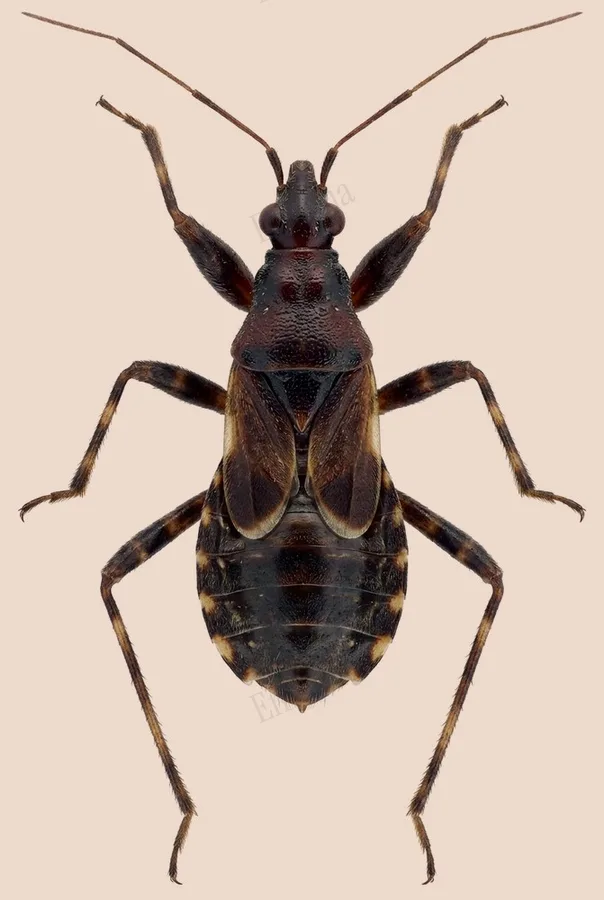
Ant damselbug
As a nymph, this predatory bug mimics an ant so convincingly that pale bands on its early body segments create the illusion of a narrow ant like waist.
| Where | Dry open grassland and low vegetation |
|---|---|
| Size | 7 to 8 mm body length |
| When | April to October |
This slim predatory bug has a brown body, partly developed wings and a black connexivum marked with orange red spots along the abdomen edge. Young nymphs closely resemble ants, with pale bands across the early body segments creating the look of a narrow, ant like waist that fades as they mature.
Adults hunt small insects among low vegetation and on the ground, remaining active in most months of the year, with mating and egg laying in spring and a new generation of adults appearing by late summer.
Traits
Habitat
Grassland
Colour
Brown, Orange
Active
Day
To people
A predatory bug that hunts other insects and is not known to bite people.
Activity through the year
Often confused with
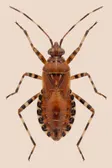
Larger at about 8 to 11.5 mm body length, with longer antennae and shorter wings than the smaller Ant damselbug.
Questions
Is the Ant damselbug dangerous to people?
A predatory bug that hunts other insects and is not known to bite people.
When can you see the Ant damselbug?
The Ant damselbug can be seen from April to October, by day.
Plate retouched from a museum specimen photo by Gunnar Engan, Norwegian Biodiversity Information Centre, CC BY 4.0, GBIF Licence
Report a mistake in this entry
True bugs›Damsel bugs›Himacerus
Last updated 2026-09-26. Every entry is checked against published sources.