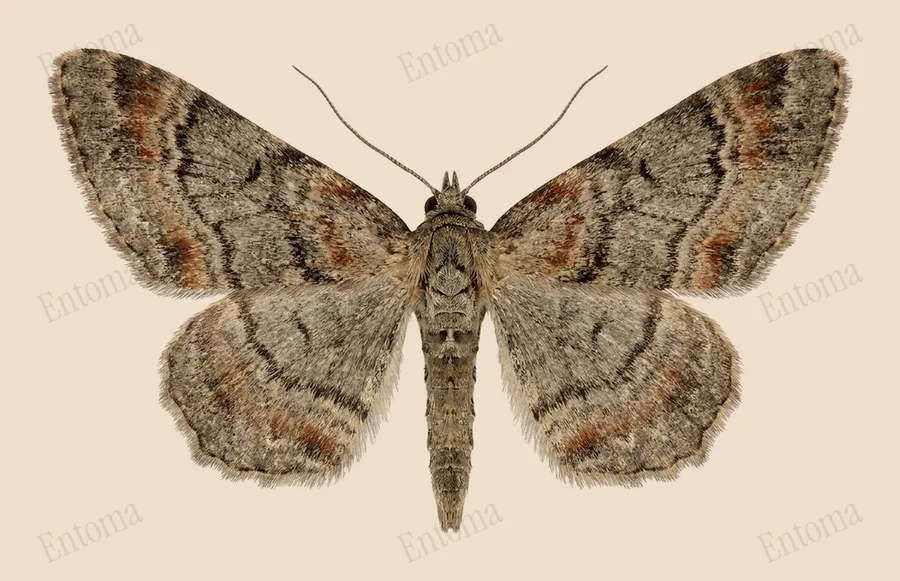
Double-striped pug
It can fly in almost any month, sometimes appearing on the wing in a mild January despite normally flying only from spring to autumn.
| Where | Gardens, hedgerows, and scrub |
|---|---|
| Size | 15 to 19 mm wingspan |
| When | March to September |
It is a small moth with pointed forewings crossed by two dark bands over a ground colour that ranges from light to dark reddish brown, and pale grey hindwings marked with a small dark spot.
Caterpillars feed on the flowers of shrubs such as gorse and holly rather than on leaves, and the species usually produces two generations a year, with adults sometimes appearing as early as January in a mild winter.
Traits
Habitat
Garden
Colour
Brown, Grey
Active
Night
To people
Harmless
Activity through the year
Often confused with
The V-pug has green forewings marked with a dark V-shaped mark near the leading edge, quite unlike the double-striped pug's reddish-brown banding, even though the two moths share a similar wingspan.
Questions
Is the Double-striped pug dangerous to people?
The Double-striped pug is harmless to people.
When can you see the Double-striped pug?
The Double-striped pug can be seen from March to September, at night.
Plate retouched from a photo by David Short from Windsor, UK, CC BY 2.0, Wikimedia Commons Licence
Report a mistake in this entry
Butterflies and moths›Geometer moths›Gymnoscelis
Last updated 2026-09-26. Every entry is checked against published sources.