Mottled umber
Female mottled umbers are completely wingless and spend their whole adult life climbing tree trunks after dark, waiting for a flighted male to find them.
| Where | Woodland, scrub and hedgerows |
|---|---|
| Size | 30 to 45 mm wingspan (males); females wingless |
| When | September to December |
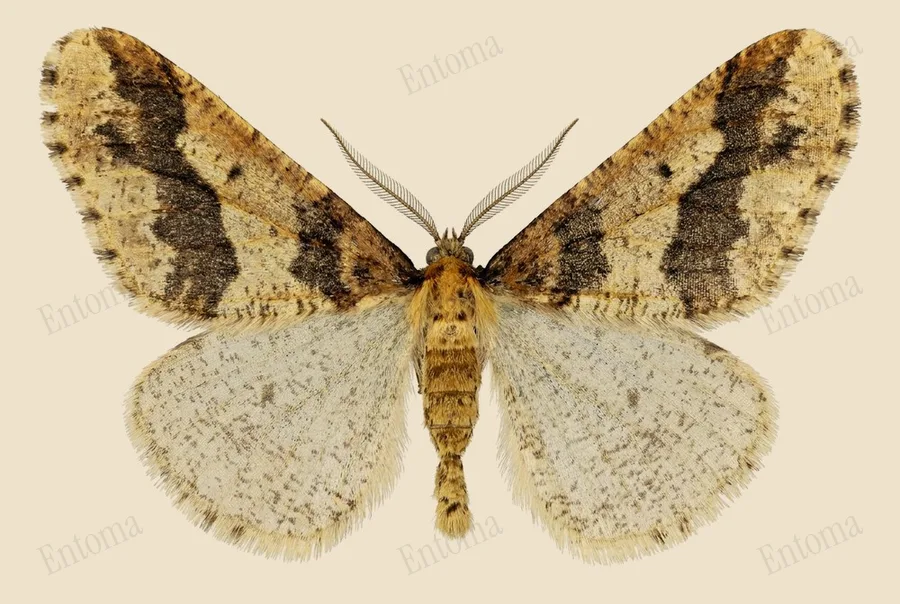
Male mottled umbers are light chocolate brown with two darker cross bands, though colouring varies considerably and some individuals are almost black; the wingspan runs from about 30 to 45 mm. Females are completely wingless and spider like, patterned in white or yellow with black patches.
Caterpillars feed on oak, birch, hazel, hawthorn, blackthorn and other trees, and the species overwinters as an egg. Wingless females climb tree trunks after dark late in the year to mate, while winged males fly at night over woodland, scrub and hedgerows.
Traits
Habitat
Woodland
Colour
Brown, Black, White
Active
Night
To people
Wingless females are sometimes noticed climbing tree trunks after dark; harmless to people.
Activity through the year
Often confused with
Usually smaller at 27 to 35 mm, the scarce umber has a warmer, golden yellow ground colour and tends to fly earlier in the autumn than the mottled umber.
Questions
Is the Mottled umber dangerous to people?
Wingless females are sometimes noticed climbing tree trunks after dark; harmless to people.
When can you see the Mottled umber?
The Mottled umber can be seen from September to December, at night.
Plate retouched from a photo by Didier Descouens, CC BY‑SA 4.0, Wikimedia Commons Licence
The plate on this page is shared under the same licence as its source, CC BY-SA.
Report a mistake in this entry
Butterflies and moths›Geometer moths›Erannis
Last updated 2026-09-26. Every entry is checked against published sources.