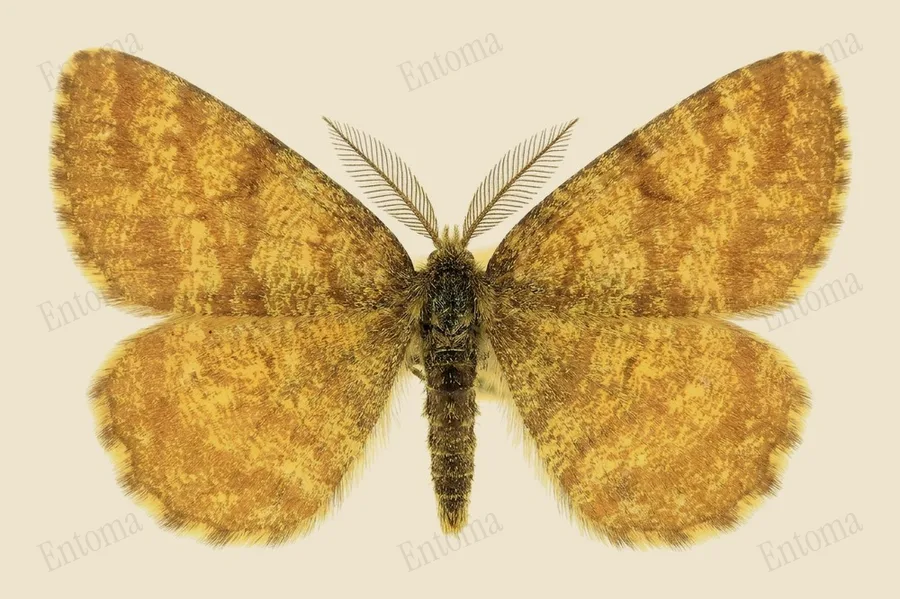
Common heath
Males have feathery, comb-like antennae for detecting the female's scent, and the species is variable enough that some individuals turn almost entirely yellow on chalky ground.
| Where | Heathland, moorland, and grassland |
|---|---|
| Size | 22 to 34 mm wingspan |
| When | April to August |
The common heath is a variable day-flying moth ranging from yellowish brown to dark brown, with males recognisable by their comb-like antennae, and a large yellow form occurring locally on chalky ground.
Caterpillars feed on heather, heath, and clovers, overwintering as a pupa, and adults fly mainly in late spring with a smaller second appearance in late summer across heaths and open grassland.
Traits
Habitat
Heath
Colour
Brown, Yellow
Active
Day
To people
Harmless to people.
Activity through the year
Often confused with
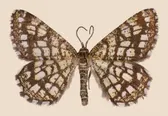
The latticed heath is a similar size at 20 to 32 mm but has a network of brown lines across a yellowish or white ground, giving a latticed look quite different from the common heath's plainer wings.
Questions
Is the Common heath dangerous to people?
Harmless to people.
When can you see the Common heath?
The Common heath can be seen from April to August, by day.
Plate retouched from a photo by Vítězslav Maňák (SLU), CC BY‑SA 3.0, Wikimedia Commons Licence
The plate on this page is shared under the same licence as its source, CC BY-SA.
Report a mistake in this entry
Butterflies and moths›Geometer moths›Ematurga
Last updated 2026-09-26. Every entry is checked against published sources.