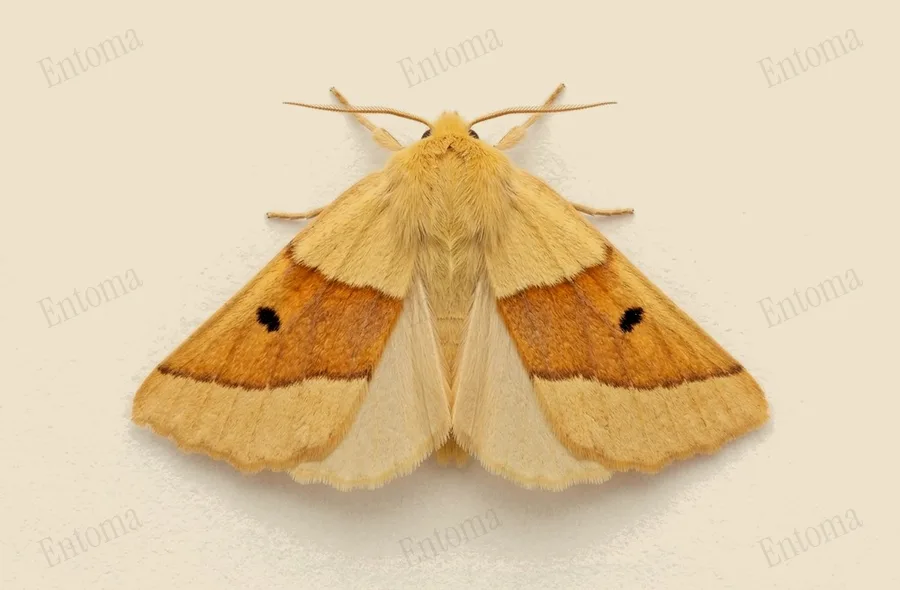
Scalloped oak
The scalloped oak's wings have a finely scalloped outer edge, and its caterpillars are generalists that feed on dozens of different deciduous trees and shrubs.
| Where | Woodland, hedgerows and garden edges |
|---|---|
| Size | 32 to 41 mm wingspan |
| When | July to September |
The Scalloped Oak has yellowish tan forewings crossed by a broad orange brown band, with a single elongated dark spot near the centre and a finely scalloped outer edge. The hindwings are paler and plainer, and the moth rests with its wings spread flat.
A single generation flies in July and August, when adults are readily drawn to light, sometimes in large numbers. The caterpillars are generalist feeders, taking leaves from a wide range of deciduous trees, hedgerow shrubs and garden plants.
Traits
Habitat
Garden
Colour
Yellow, Brown
Active
Night
To people
Harmless to people; the adults are frequent visitors to garden light traps in summer.
Activity through the year
Often confused with
Larger at 46 to 52 mm wingspan and darker overall, with a discal mark made of four small dots rather than the single elongated spot of the Scalloped Oak.
Questions
Is the Scalloped oak dangerous to people?
Harmless to people; the adults are frequent visitors to garden light traps in summer.
When can you see the Scalloped oak?
The Scalloped oak can be seen from July to September, at night.
Plate retouched from a photo by Patrick Clement from West Midlands, England, CC BY 2.0, Wikimedia Commons Licence
Report a mistake in this entry
Butterflies and moths›Geometer moths›Crocallis
Last updated 2026-09-26. Every entry is checked against published sources.