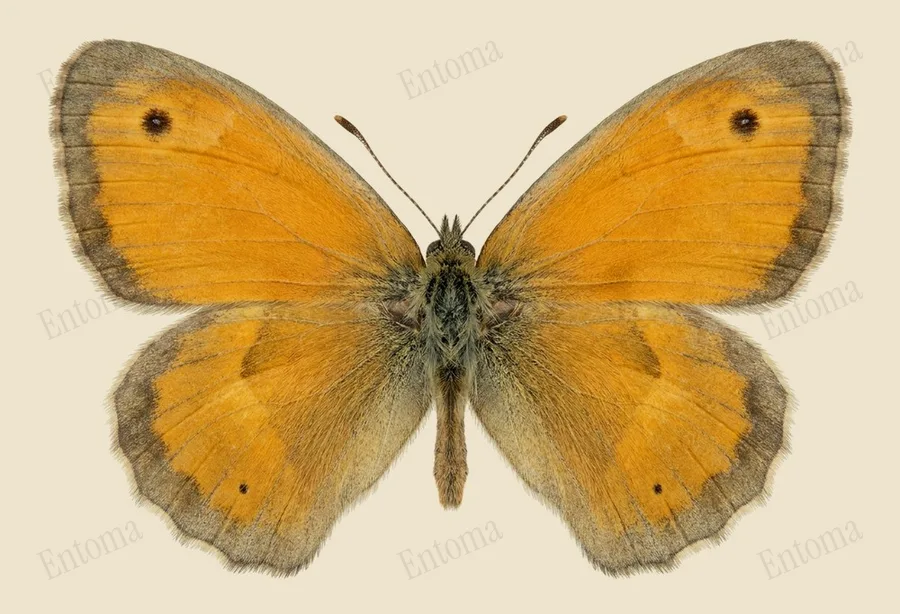
Small heath
This small butterfly always lands with its wings closed, so its blue-grey and orange underside pattern is the only view most observers ever get.
| Where | Grassy meadows, heaths and woodland edges |
|---|---|
| Size | 30 to 36 mm wingspan |
| When | May to September |
The Small heath is a compact orange-brown butterfly with a dark wing border and a single black eyespot near the forewing tip. It never basks with its wings open, so only the greyish, eyespotted underside is normally seen once it settles.
Two to three generations fly through the warmer months in sunny, grassy places, and eggs are laid at the base of fine grasses such as fescues and meadow-grasses, which the caterpillars then feed on.
Traits
Habitat
Grassland
Colour
Orange, Brown
Active
Day
To people
Basks only with wings closed in sunny grassland; it does not trouble people.
Activity through the year
Often confused with
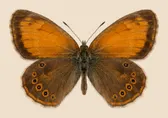
Somewhat larger at about 32 to 42 mm wingspan, with a row of white-pupilled eyespots and a pale band across the underside hindwing that the Small heath lacks.
Questions
Is the Small heath dangerous to people?
Basks only with wings closed in sunny grassland; it does not trouble people.
When can you see the Small heath?
The Small heath can be seen from May to September, by day.
Plate retouched from a museum specimen photo by Lauri Mällo, PlutoF, CC BY 4.0, GBIF Licence
Report a mistake in this entry
Butterflies and moths›Brush-footed butterflies›Coenonympha
Last updated 2026-09-26. Every entry is checked against published sources.