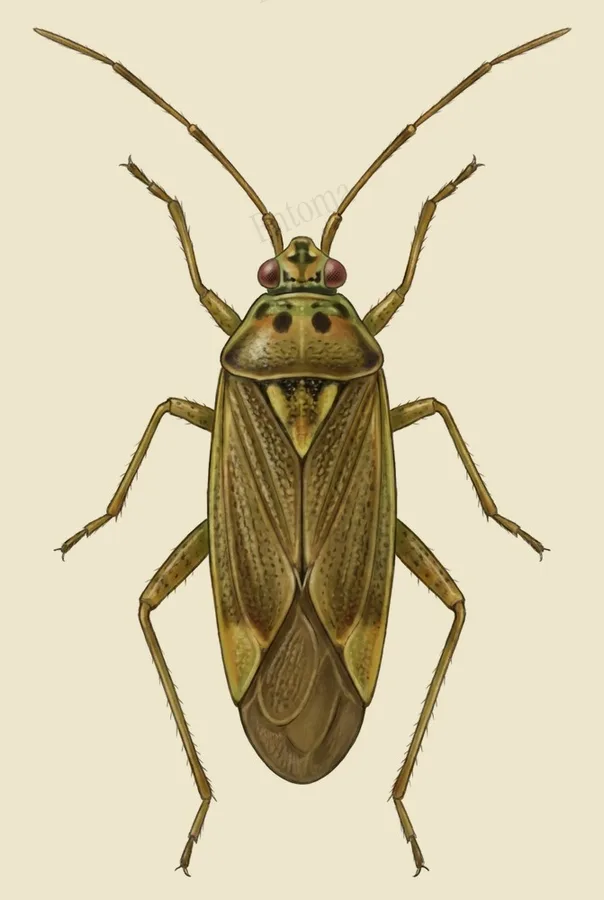
Trivial plant bug
This sap-feeding bug switches diet with the seasons, moving from weeds like nettle onto olive and citrus trees, where it can damage the crop.
| Where | Weedy ground, orchards and hedgerows |
|---|---|
| Size | 7 to 8 mm body length |
| When | May to June |
This mirid bug is variably coloured, with yellow-green females and males that show black and red toward the wing tips; the pronotum carries a pair of dark central spots plus a dark mark at each corner.
It feeds on sap from nettles and related weeds as well as olive and citrus trees, and lays its eggs in bark cracks that stay dormant over winter. A single generation develops each year, with adults active for only a couple of months in late spring.
Traits
Habitat
Farmland
Colour
Green, Yellow, Red
Active
Day
To people
Does not bite or sting people; it feeds only on plant sap through piercing mouthparts.
Activity through the year
Often confused with
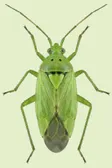
Its pronotum carries only two dark spots at the centre, without the extra dark mark at each corner that the Trivial Plant Bug also shows.
Questions
Is the Trivial plant bug dangerous to people?
Does not bite or sting people; it feeds only on plant sap through piercing mouthparts.
When can you see the Trivial plant bug?
The Trivial plant bug can be seen from May to June, by day.
Plate retouched from a photo by Gino Brignoli, CC BY 4.0, iNaturalist Licence
Report a mistake in this entry
True bugs›Plant bugs›Closterotomus
Last updated 2026-09-26. Every entry is checked against published sources.