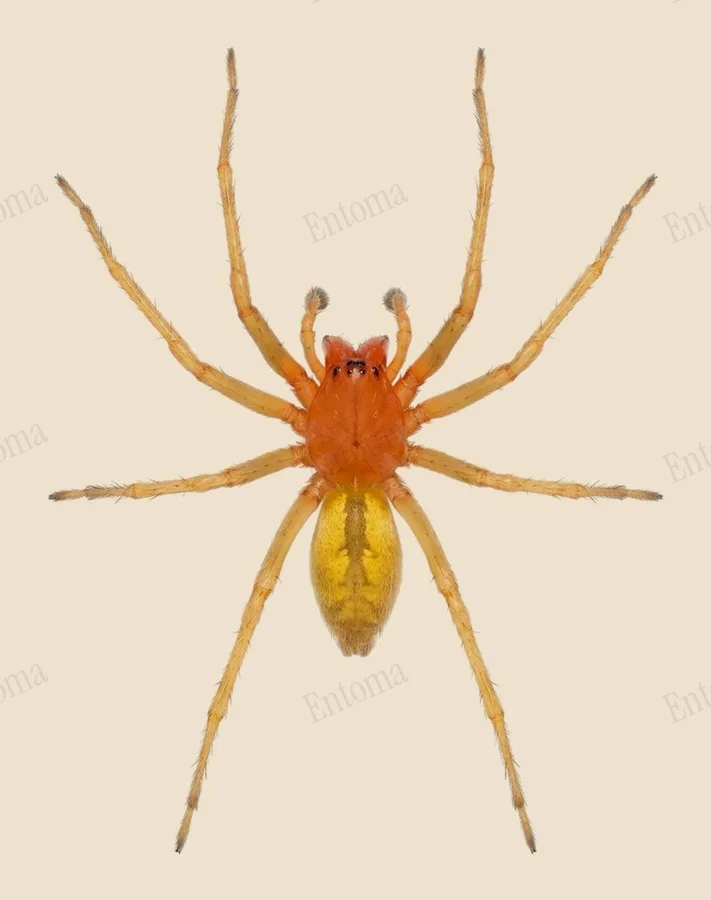
European yellow sac spider
This spider folds a blade of grass into a purse shaped nursery for its eggs, then guards it so fiercely that it will bite anything that disturbs it.
| Where | Warm meadows and tall grassland |
|---|---|
| Size | Female 10 to 15 mm, male 7.5 to 12 mm body length |
| When | June to October |
The head end is orange to reddish with stout, dark tipped jaws, while the abdomen is pale yellow to greenish, and the legs are long and pale. It is the largest species in its genus found in Europe.
By day it hides in a silk sac folded from a blade of grass or seed head, emerging at dusk and through the night to hunt actively rather than build a web; females guard their egg sac inside a similar folded shelter.
Traits
Habitat
Grassland
Colour
Yellow, Orange, Green
Active
Night
To people
Take care
Bites are painful, similar to a wasp sting, and can cause local swelling with occasional mild fever or nausea, but they are not dangerous to people; wash the bite and seek medical care if symptoms worsen.
Activity through the year
Often confused with
Much smaller, with females reaching only about 8 to 9 mm, and shows a broad dark red stripe down a creamy yellow abdomen, unlike the plain pale yellow to greenish abdomen and larger size of the European yellow sac spider.
Questions
Is the European yellow sac spider dangerous to people?
Take care. Bites are painful, similar to a wasp sting, and can cause local swelling with occasional mild fever or nausea, but they are not dangerous to people; wash the bite and seek medical care if symptoms worsen.
When can you see the European yellow sac spider?
The European yellow sac spider can be seen from June to October, at night.
Plate retouched from a photo by Вячеслав Юсупов, CC BY 4.0, iNaturalist Licence
Report a mistake in this entry
Spiders›Yellow sac spiders›Cheiracanthium
Last updated 2026-09-27. Every entry is checked against published sources.