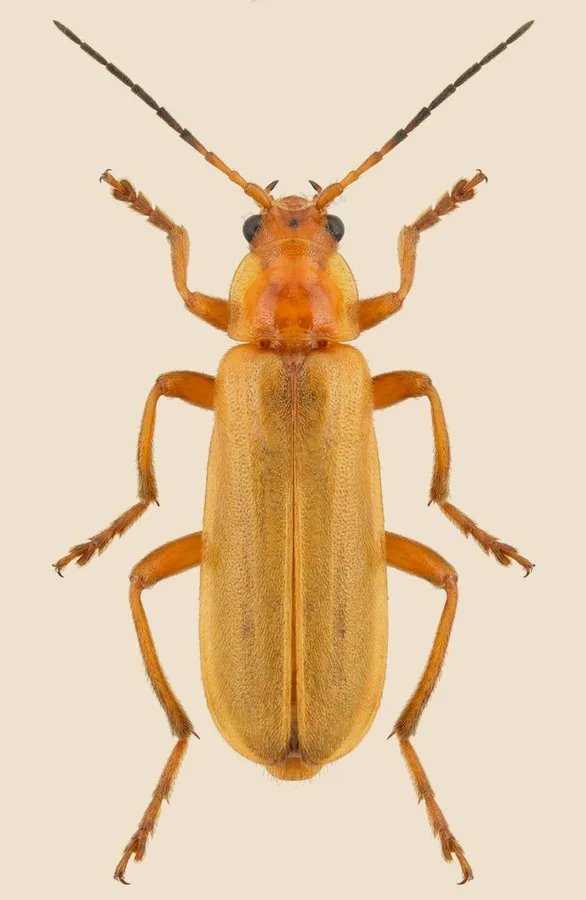
Pale soldier beetle
A unique black spot behind each eye separates this soldier beetle from all its similar looking orange-brown relatives found in the same grasslands.
| Where | Tall grass, hedgerows, and woodland edges |
|---|---|
| Size | 10 to 15 mm body length |
| When | May to July |
The pale soldier beetle has an orange-brown head, thorax and abdomen, with elytra that vary from orange to almost black, a distinctive black spot behind each eye, and a broad black band at the base of the hind legs.
Adults hunt small insects on flowers through late spring and summer in tall grass, hedgerows and woodland edges, while the soft-bodied larvae hunt snails and worms at ground level.
Traits
Habitat
Grassland
Colour
Orange, Brown, Black
Active
Day
To people
Harmless to handle; hunts other insects rather than defending itself when disturbed.
Activity through the year
Often confused with
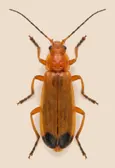
Smaller at 8 to 10 mm, with shiny red elytra ending in a black patch near the tip, unlike the plain-ended elytra of the pale soldier beetle.
Questions
Is the Pale soldier beetle dangerous to people?
Harmless to handle; hunts other insects rather than defending itself when disturbed.
When can you see the Pale soldier beetle?
The Pale soldier beetle can be seen from May to July, by day.
Plate retouched from a photo by Magnefl, CC BY‑SA 4.0, Wikimedia Commons Licence
The plate on this page is shared under the same licence as its source, CC BY-SA.
Report a mistake in this entry
Beetles›Soldier beetles›Cantharis
Last updated 2026-09-26. Every entry is checked against published sources.