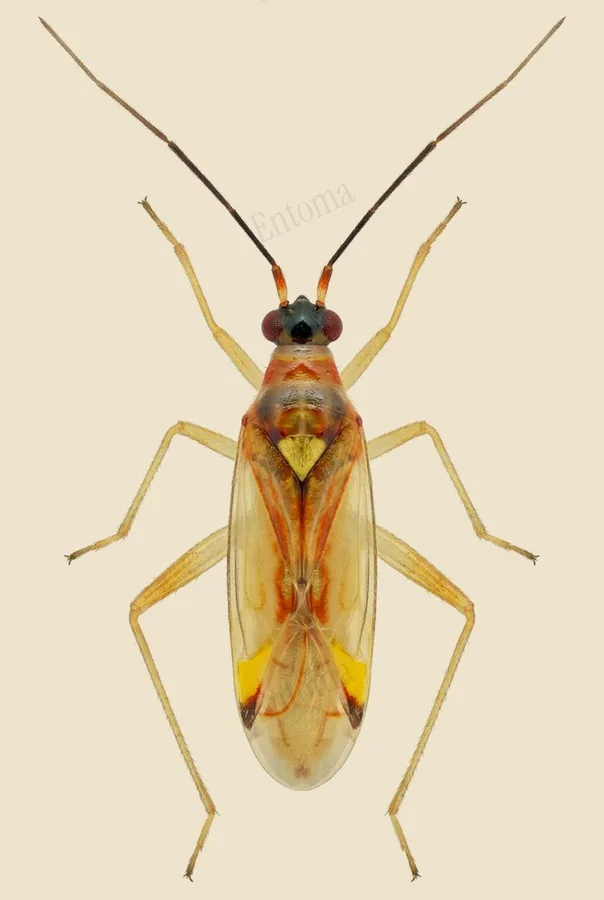
Campyloneura virgula
This predatory bug reproduces without mating, since males are extremely rare, and a single female can help control pear pests and orchard mites.
| Where | Hazel, hawthorn and oak trees |
|---|---|
| Size | 4 to 5 mm body length |
| When | May to August |
Campyloneura virgula is a small, pale mirid bug with a green tinged pronotum edged in red, a yellow scutellum, a black head and long, red banded antennae, ending in a bright yellow cuneus tipped with dark red.
It hunts small insects and mites on the leaves of hazel, hawthorn and oak, and is valued in orchards as a natural predator of pear psylla and mite eggs. Almost all individuals are female, since the species reproduces without mating.
Traits
Habitat
Woodland
Colour
Green, Yellow
Active
Day
To people
Too small to trouble people; a beneficial predator in gardens and orchards.
Activity through the year
Often confused with
Larger at about 6 to 8 mm, with a strikingly patterned black and white adult and bluish green rather than yellow nymphs.
Questions
Is Campyloneura virgula dangerous to people?
Too small to trouble people; a beneficial predator in gardens and orchards.
When can you see Campyloneura virgula?
Campyloneura virgula can be seen from May to August, by day.
Plate retouched from a photo by Drahkrub. Attribution must include the URL http://de.wikipedia.org/wiki/Benutzer, CC BY‑SA 4.0, Wikimedia Commons Licence
The plate on this page is shared under the same licence as its source, CC BY-SA.
Report a mistake in this entry
True bugs›Plant bugs›Campyloneura
Last updated 2026-09-26. Every entry is checked against published sources.