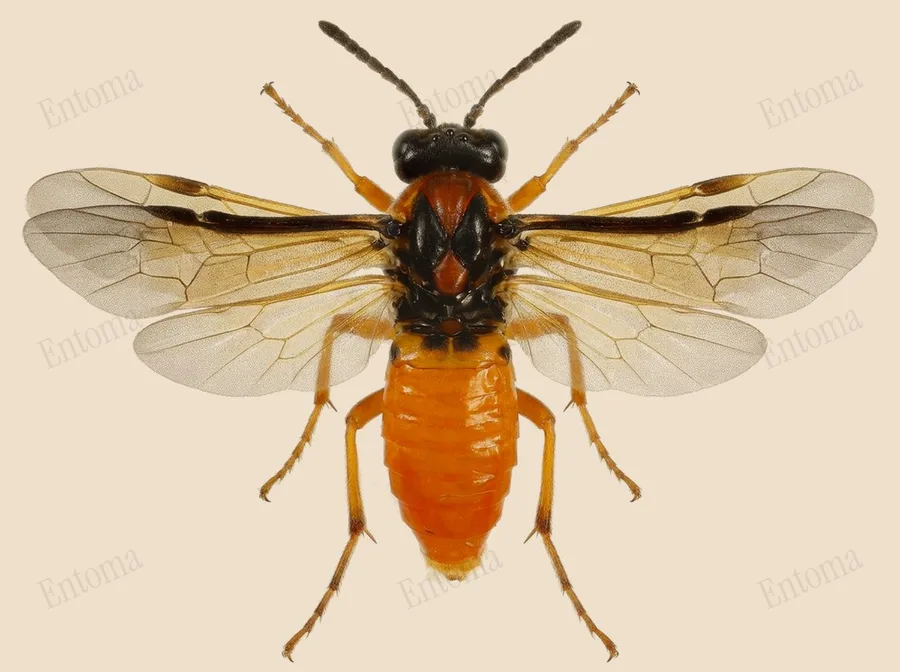
Turnip sawfly
Adult turnip sawflies seek out and hoard plant chemicals called clerodanoids inside their bodies, apparently using them as a defense against disease.
| Where | Fields and gardens with brassica plants |
|---|---|
| Size | 6 to 8 mm body length |
| When | May to October |
It is a small, thick bodied sawfly with a mostly yellow and black body, and a distinctive orange and black chequerboard pattern across the top of the thorax that sets it apart from other Athalia species.
Larvae are dark green to blackish with a paler stripe along each side, feeding openly on the leaves of brassicas and other cruciferous plants and able to strip a crop down to bare stalks when numerous.
Traits
Habitat
Farmland
Colour
Yellow, Black, Orange
Active
Day
To people
Harmless to people
Activity through the year
Often confused with
It lacks the bold orange and black chequerboard pattern on the thorax that marks Athalia rosae, the largest and most brightly patterned species in the genus.
Questions
Is the Turnip sawfly dangerous to people?
Harmless to people.
When can you see the Turnip sawfly?
The Turnip sawfly can be seen from May to October, by day.
Plate retouched from a photo by Janet Graham, CC BY 2.0, Wikimedia Commons Licence
Report a mistake in this entry
Bees, wasps and ants›Common sawflies›Athalia
Last updated 2026-09-26. Every entry is checked against published sources.