Map
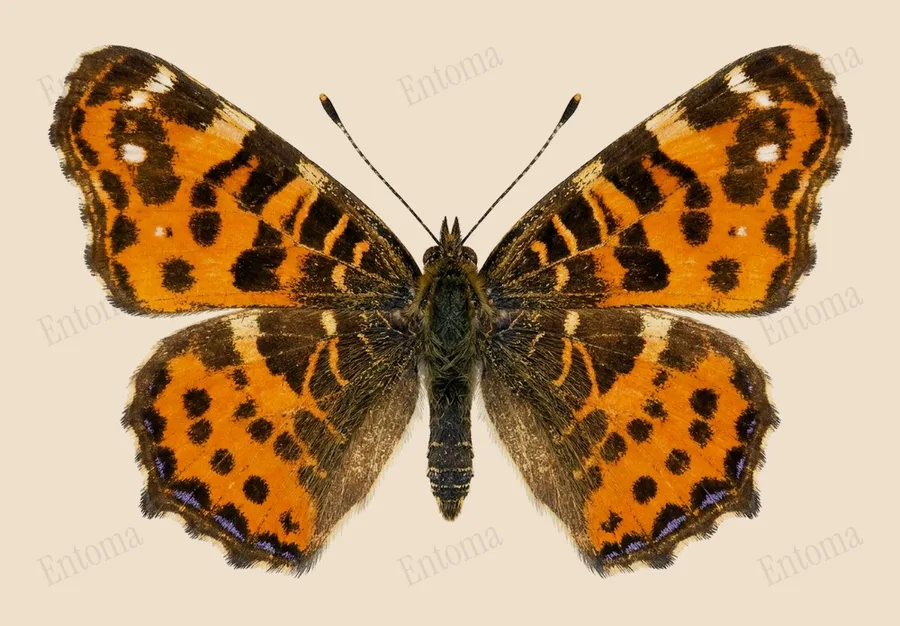
Its spring and summer broods look like two different species, one orange like a small fritillary, the other black and white like a miniature admiral, purely because of day length during the caterpillar stage.
| Where | Woodland edges, riverbanks, damp meadows |
|---|---|
| Size | 28 to 40 mm wingspan |
| When | April to September |
The spring brood is orange-brown with black spots, while the summer brood is blackish with a bold white band and orange margins, and both forms share a maze-like pale pattern on the underside that gives the species its name.
Which form a caterpillar becomes depends on how many hours of daylight it experiences before pupating, not on any genetic difference between the broods.
Traits
Habitat
Woodland
Colour
Orange, Black, White
Active
Day
To people
Harmless
Activity through the year
Often confused with

The summer-form map closely resembles a small black-and-white white admiral, having lost most of its orange coloring, but it is much smaller in wingspan than the white admiral.
Questions
Is the Map dangerous to people?
The Map is harmless to people.
When can you see the Map?
The Map can be seen from April to September, by day.
Plate retouched from a photo by Didier Descouens, CC BY‑SA 4.0, Wikimedia Commons Licence
The plate on this page is shared under the same licence as its source, CC BY-SA.
Report a mistake in this entry
Butterflies and moths›Brush-footed butterflies›Araschnia
Last updated 2026-09-26. Every entry is checked against published sources.