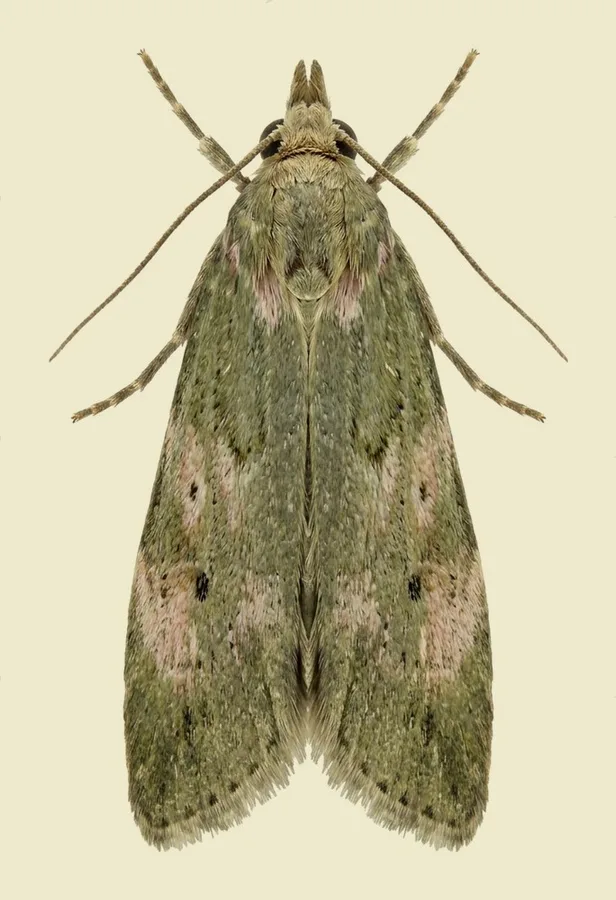
Bee moth
Its caterpillars live inside bumblebee and wasp nests, spinning tough silk cocoons side by side that are hard for predators to bite through.
| Where | Gardens, farmland and near bee nests |
|---|---|
| Size | 18 to 44 mm wingspan |
| When | April to July |
The Bee moth is a variable species with reddish brown to tan forewings, and males show more contrasting patterning than the plainer, more uniformly colored females, which also carry a dark central spot on each forewing.
Caterpillars develop inside the nests of bumblebees and social wasps, feeding on wax comb, pollen and debris, and pupate in tough silken cocoons that are often clustered together in large groups within the abandoned nest.
Traits
Habitat
Garden
Colour
Brown
Active
Night
To people
Attracted to light; harmless to people, though the caterpillars can damage bee and wasp nests.
Activity through the year
Often confused with
Similar in habit, living in bee nests as a caterpillar, but smaller with a wingspan of about 30 to 41 mm and greyish-brown forewings rather than the reddish-brown tones typical of male Bee moths.
Questions
Is the Bee moth dangerous to people?
Attracted to light; harmless to people, though the caterpillars can damage bee and wasp nests.
When can you see the Bee moth?
The Bee moth can be seen from April to July, at night.
Plate retouched from a photo by David Short from Windsor, UK, CC BY 2.0, Wikimedia Commons Licence
Report a mistake in this entry
Butterflies and moths›Pyralid moths›Aphomia
Last updated 2026-09-26. Every entry is checked against published sources.